Here’s a question for you: If you earned 500 backlinks tomorrow, would it help your website or destroy it?
The answer depends entirely on how those links were acquired. We have seen a single editorial mention from a high-authority publication move rankings in ways that hundreds of paid or manipulated links never will.
One of our data properties earned a DR 96 editorial backlink from Amazon without a single outreach email, simply because the content solved a problem their editorial team needed solved.
But the opposite is also true: We have worked with clients whose entire organic presence was wiped out by a single algorithm update after years because of using shortcut link schemes.
This guide covers every white-hat link-building strategy we have learned from building and scaling campaigns across industries. It shows you how search engines and AI systems evaluate backlinks and explains the tactics that you can apply to start earning high-quality backlinks the right way.
What Is White-Hat Link Building?
White-hat link building means earning backlinks through methods that comply with search engine guidelines, provide genuine value to readers, and reflect the editorial judgement of the site linking to you.
Google’s own documentation puts it plainly: links should reflect a genuine editorial choice, not be created primarily to manipulate PageRank.
At LinkBuild.Agency, our definition is simple: a white-hat backlink exists because another site chose to reference your content to help their readers. You gain the link because the page deserves it, not because it was bought or manipulated. That is the standard we use to measure every campaign we run.
White-Hat vs. Black-Hat vs. Grey-Hat Link Building
The three approaches differ on one question:
Would you be comfortable explaining the link to a Google engineer?
White hat says yes. Black hat hides it. Grey hat hopes nobody asks.
| Approach | Core Method | Risk Level | Examples |
|---|---|---|---|
| White-Hat | Earn links with genuine value and outreach | None, update-safe | Digital PR, original data, and broken link building |
| Black-Hat | Manipulate links against Google’s rules | High, penalty-prone | Link buying, PBNs, and comment spam |
| Grey-Hat | Break guidelines without clearly breaking them | Medium can flip overnight | Paid guest-posts, mass HARO link-grabs |
The grey-hat category is where the most problems begin. At LinkBuild, about half of the clients who come to us have backlink profiles built on tactics that seemed safe for years before an algorithm update flagged them as spam.
Common examples include paid guest posts on low-quality websites, large-scale link exchanges disguised as partnerships, and sending templated HARO pitches to hundreds of journalists.
These tactics feel safe for a while until they are not, and recovering from them is much harder than building links the right way from the start.
Why Search Engines Reward White-Hat Practices
Google’s core algorithm is built on one premise: links are votes of trust. When a site links to you without being paid, it tells Google that your content is worth sending to readers. That signal is extremely hard to fake at scale, which is exactly why Google values it.
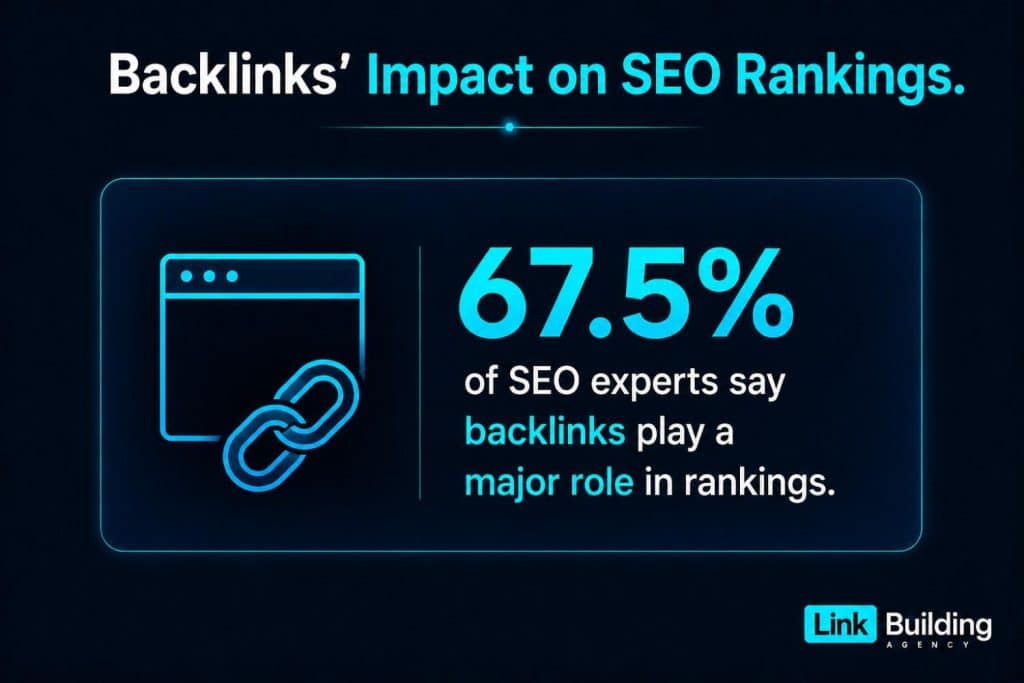
In a survey conducted by uSERP, 67.5% of SEO experts say backlinks play a major role in rankings. To protect that signal, Google built systems like SpamBrain to detect manipulated links.
We have seen the impact firsthand. Some clients came to us after core updates caused their organic traffic to drop by 40% to 60%. In many cases, the reason was the same: their backlink profiles were built on paid placements and PBN networks that Google eventually flagged.
White-hat backlinks, by contrast, are future-proof. They are earned on editorial merit, so no algorithm update can invalidate them. That is the compounding advantage. Every white-hat link you earn today can still be helping your site years from now.
Why White-Hat Link Building Still Matters in the Age of AI Search
Some practitioners think backlinks don’t matter as much anymore because of AI search. But data shows they still matter.
Now, links and brand mentions help in two ways: they improve traditional search rankings and also influence AI-generated answers that appear at the top of results.
How Links Influence Search Visibility
The strongest evidence comes from Ahrefs, which ran a controlled experiment. They disavowed backlinks (told Google to ignore them) on a set of pages and measured the impact.
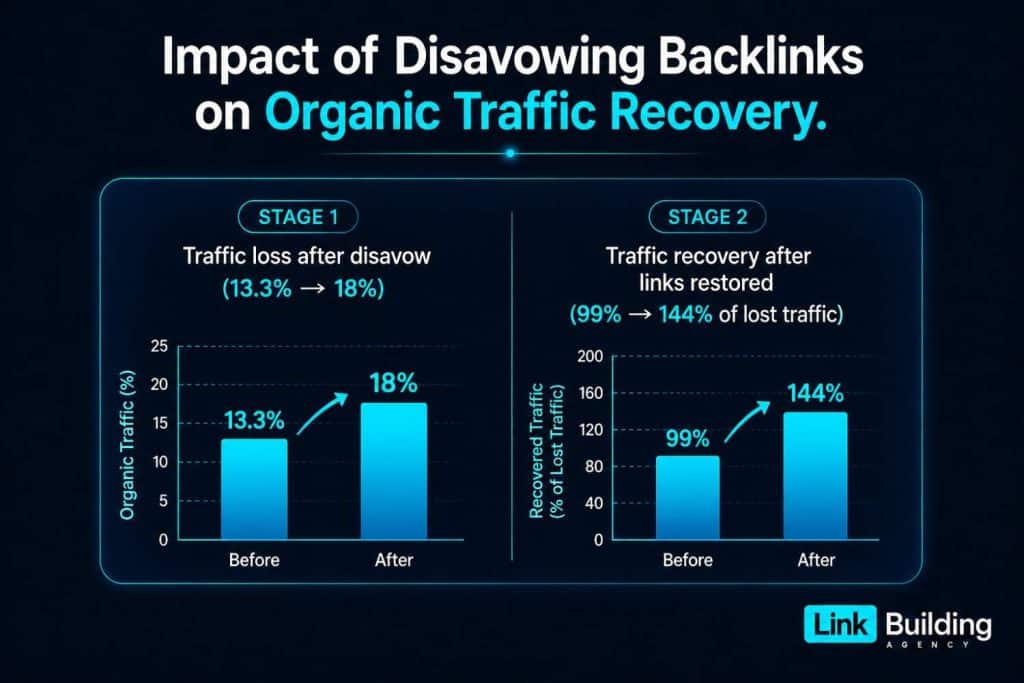
Those pages lost 13.3% to 18% of their traffic. When the links were restored, 99% to 144% of the lost traffic came back. This shows a clear cause-and-effect relationship. Backlinks still have a direct impact on rankings.
Backlinko’s analysis found a similar pattern. The page ranking in the #1 position has 3.8 times more backlinks than pages ranking between positions two and ten, and websites with higher Domain Rating tend to rank better across the first page.
At LinkBuild, we see this in every campaign. When we build editorial backlinks to a target, rankings for that page and the related content often start improving within 8-12 weeks. The results are not instant, but they are reliable and measurable.
AI Overviews, AI Mode, and Answer Engines
Google AI Overviews now appear across a significant share of queries across industries like health, technology, and informational verticals.
AI Overviews now show in over 25% of Google searches, up from 13% a year earlier. They also appear above traditional organic results, changing where users generally click.
An Ahrefs study of 300,000 keywords found that AI Overviews reduce the click-through rate of the #1 organic result by about 58%, weakening the value of top rankings.
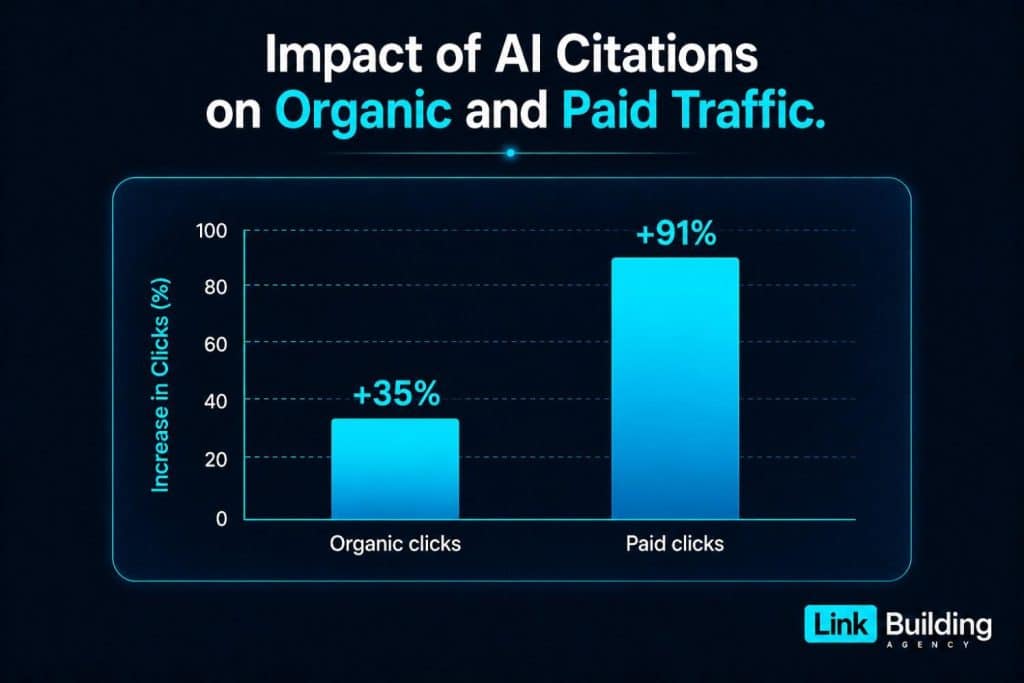
However, pages cited in AI Overviews gain 35% more organic clicks and 91% more paid clicks.
This shows that the value of search traffic has not disappeared; it has simply shifted. Being a source that Google’s AI cites is becoming just as important as ranking in the top three organic results.
Why Brand Mentions and Authority Matter More Than Ever
Ahrefs analyzed 75,000 brands across Google AI Overviews, ChatGPT, and AI Mode in 2025. The results were striking: branded web mentions had about three times more correlation with AI Overview visibility than the number of backlinks a website had.
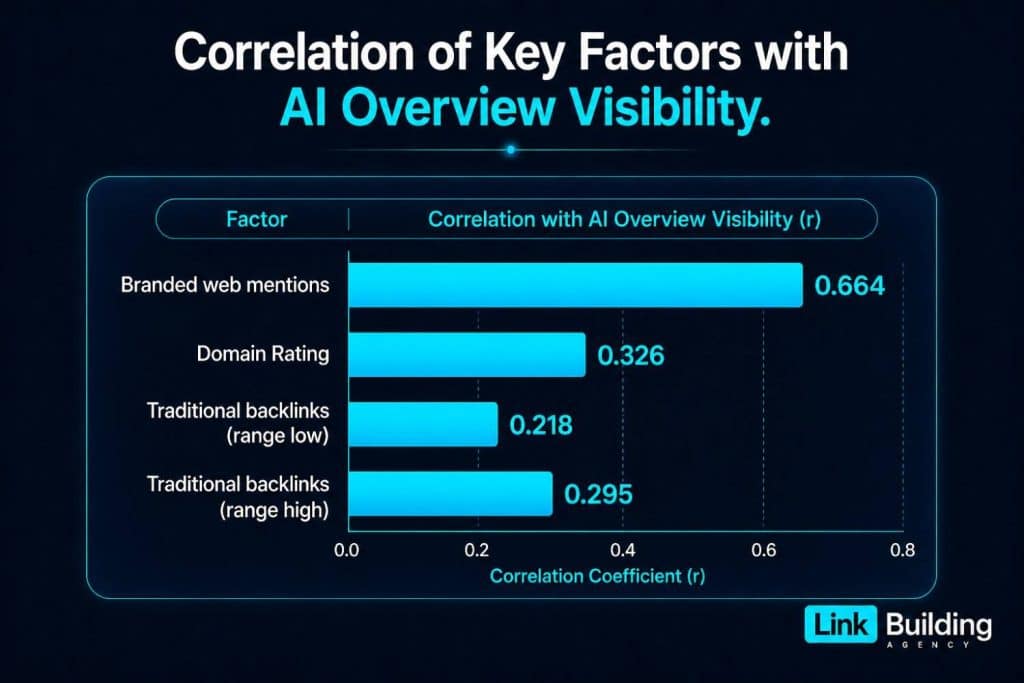
In simple terms, how often your brand is mentioned online may matter more for AI visibility than the number of links pointing to your site.
This does not mean backlinks are no longer important. It means the strategies that earn high-quality backlinks, such as digital PR, journalist coverage, and editorial citations, also help build the brand signals AI systems look for.
For example, a digital PR campaign that earns a mention in Forbes can do two things. It can generate a valuable backlink and help AI systems recognize your brand as a trusted source.
This is why we tell clients that digital PR is no longer just a link-building tactic but an AI visibility strategy. The campaigns that earn real editorial coverage are the same campaigns that help position your brand as a trusted source for AI systems.
Links, Mentions, and Citations: What’s the Difference?
These terms might look similar, but they perform different things. Understanding common link-building terms helps you plan campaigns that win across both traditional and AI search instead of optimizing for only one signal.
| Signal | What It is | Why It Matters | Value for Traditional SEO | Value for AI Search |
|---|---|---|---|---|
| Links | A clickable hyperlink from another site to yours | Passes ranking authority and referral traffic | High | Moderate |
| Mentions | Your brand name is referenced without a link | Builds entity strength for Google and AI | Low | High |
| Citations | Your content is used as a source by an AI engine | Drives visibility inside AI answers | Medium | Very High |
| Editorial Coverage | A journalist or publisher writes about you with a link | Builds trust, authority, and broad visibility across both search and AI systems | Very High | Very High |
At LinkBuild, we design campaigns to generate all four at the same time. A well-executed digital PR campaign does more than earn a backlink. It gets your brand mentioned in trusted publications, increases the chances of your data being cited by AI systems, and creates editorial coverage that builds value across both search environments.
This is why we focus on earned media and original data over isolated link tactics. The impact goes far beyond a single backlink.
How Search Engines and AI Systems Discover Content
Understanding how modern search and AI retrieval work changes how you should structure your content. It directly impacts whether your linkable asset gets noticed and cited.
Search engines’ AI systems no longer match one query to ten pages. They break the search into smaller questions, find the most useful information from different sources, and combine those answers.
Google calls this process query-fan out. AI systems use a similar method called chunk retrieval, where they pull specific sections or paragraphs instead of analyzing an entire page at once.
The key takeaway is simple: your entire page does not get cited. A specific section does. That means every H2 and H3 heading should provide a clear, standalone answer that can be referenced on its own.
At LinkBuild.Agency, this shapes how we create data pages and statistics content for our clients. Each section starts with the main finding or answer in the first two sentences, uses a clear heading that matches how people search, and keeps the paragraphs short so retrieval systems can understand and extract them easily.
When we built the data property that reached DR 87, we structured each statistical category as its own useful resource. This allowed journalists researching specific topics to cite individual sections without needing the full page for context. That structure helped the page earn citations from Adobe, Wix, and Amazon across multiple topics from the same URL.
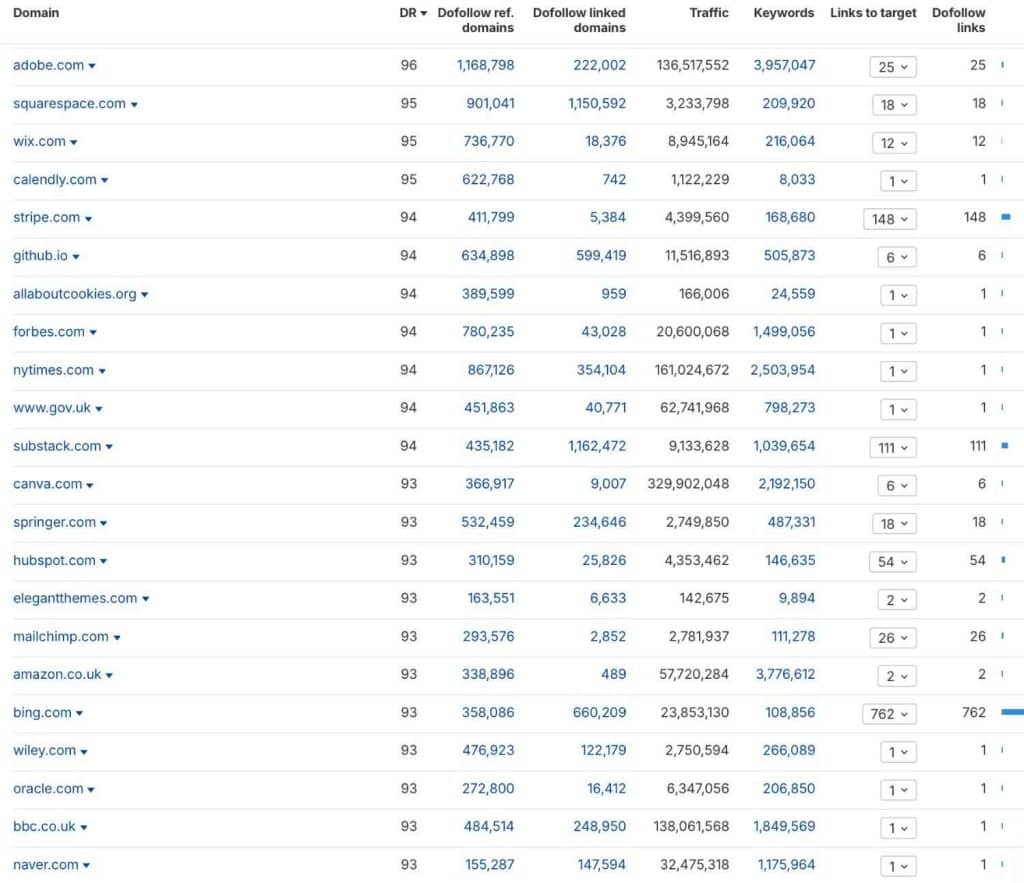
From our campaigns, a handful of traits determine whether content gets cited. None of these are tricks; they are quality signals that happen to be machine-readable.
The table below lists some of those factors.
| Factor | What it Means | How do we apply it |
|---|---|---|
| Topical authority | Your site has been published extensively and earned links on the subject | We build topic clusters around a client’s core data so the site signals depth |
| Structural clarity | Short paragraphs, clear H2/H3 hierarchy, direct answers near headings | Every linkable asset we create follows a section as a citable unit structure |
| Backlink profile | Editorial links from relevant, high-authority domains | We target DR 60+ publications with genuine editorial standards |
| Freshness | Content is updated with current data, especially for fast-changing topics | We update clients’ statistical pages every quarter |
| Schema markup | Article, FAQ, and How-To schema help AI parse content structure | We implement structured data on every data property at launch |
How We Evaluate Whether a Backlink is Worth Pursuing
Not every link opportunity is worth pursuing. Google’s link evaluation has evolved from simple PageRank counting to a multi-dimensional assessment. Here are the five factors we consider before pursuing any link, ranked by importance.
1. Relevance
A backlink from a site that covers topics related to yours is far more valuable than a link from an unrelated site, even if that website has a higher authority score. A link from a trusted sports site like ESPN pointing to your analysis is more valuable than a link from a low-quality site.
Google’s Reasonable Surfer model places more value on links when the source domain, the specific page, and the surrounding content are all relevant to your topic. In our experience, a DR 50 link from a niche-relevant publication can often outperform a DR 80 link from an unrelated industry.
2. Authority
Metrics like Domain Rating and Domain Authority are useful, but we also look at whether a site has earned links from trusted sources, gets real organic traffic, and has an actual audience.
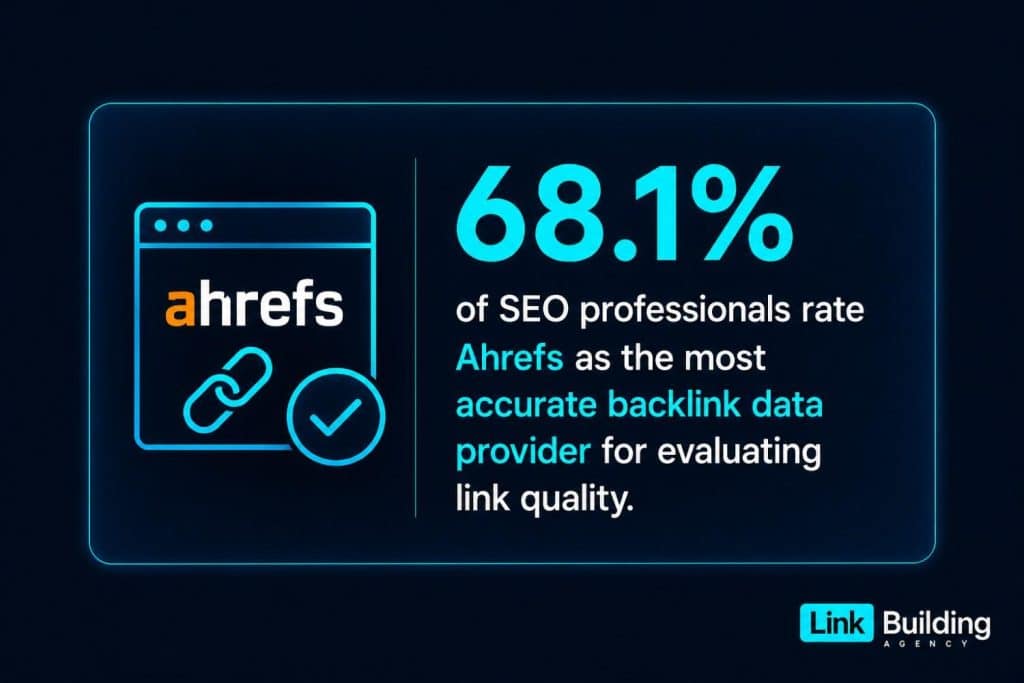
Tools like Ahrefs Domain Rating (DR) and Moz Domain Authority (DA) help estimate this. 68.1% of SEO professionals rate Ahrefs as the most accurate backlink data provider for evaluating link quality.
We have seen DR 70 websites with very little organic traffic because their score is based on old links that no longer provide meaningful value. Our minimum standard is DR 40, at least 1,000 monthly organic visits, and clear signs of genuine editorial activity.
3. Trustworthiness
Google uses TrustRank-like signals to identify websites connected to low-quality link networks. If a site receives many links from spammy or questionable sources, that can create a risk for your website.
This is why we manually review the backlink profile of every prospect, not just surface-level metrics. A site may have a strong DR score but can still be a poor opportunity if most of its links come from low-quality directories.
4. Context and Placement
A link placed naturally within the body of an article on a relevant page is worth more than a link in the site-wide footer or sidebar widget. A body link shows that a writer chose to reference your content because it adds value for their readers.
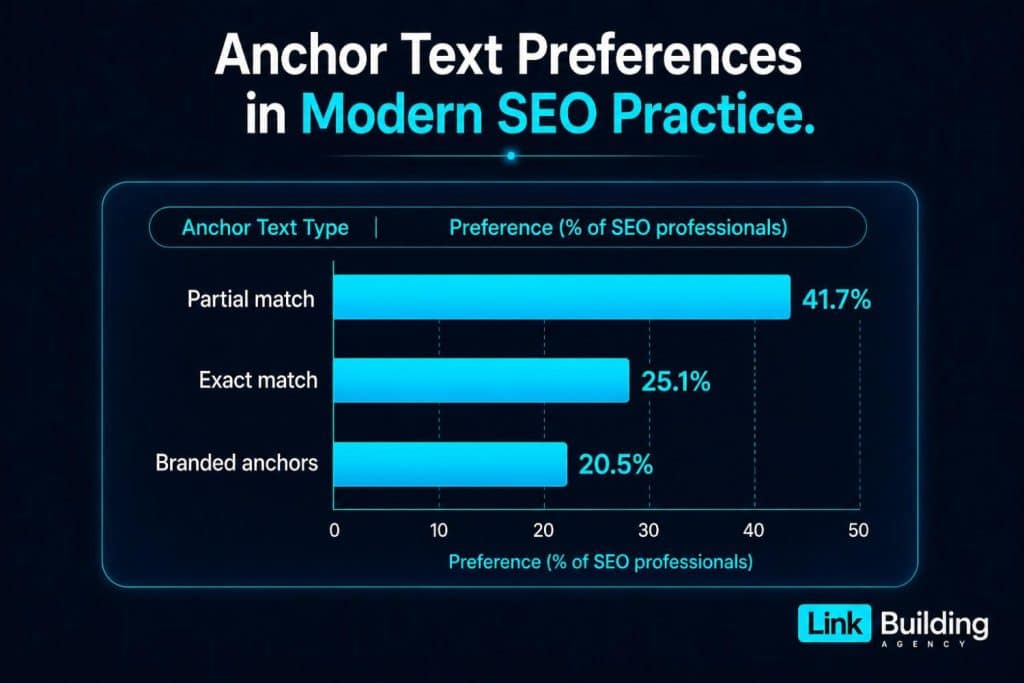
Anchor text matters too, but over-optimization can trigger penalties. Most SEO experts (about 42%) prefer using partial match anchor text. Exact match comes next with 25%, and branded anchors make up around 20%.
We focus on these editorial placements and avoid links that feel forced or built only for rankings.
5. Editorial vs. Manipulative Links
Google’s spam systems can identify the difference between genuine editorial links and links created just to manipulate the rankings.
These systems look for patterns like repeated anchor text, sudden increases in links, and other unnatural link signals. The best way to build links is to earn them naturally.
Our Backlink Evaluation Checklist
Before we pursue any link opportunity for a client, we run it against this checklist. If it fails on more than one attribute, we pass.
| Attribute | Worth pursuing | Not worth the time |
|---|---|---|
| Domain Relevance | Same or adjacent industry | Unrelated vertical |
| Domain Rating/Authority | DR 40+ with organic traffic | DR<20, no real traffic |
| Link Placement | In body text, contextually integrated | Footer, sidebar, widget |
| Anchor Text | Partial match or branded | Over-optimized exact match |
| Editorial Context | The author chose to link to add value for their readers | Paid, exchanged, or automated |
| Page Quality | Real and updated content | Thin, AI-generated |
| Link Type | Dofollow with real PageRank | Nofollow from a low-trust site |
The Evolution of Link Building: What Worked Before vs. What Works Now
The tactics that built rankings in 2015 now trigger penalties. The principle held steady, but the execution flipped. Here is the shift we have lived through with clients.
| What Worked Before | What Works Now |
|---|---|
| Mass directory and forum links | Editorial links from relevant publishers |
| Exact-match anchor text at scale | Natural brand and descriptive anchors |
| Article spinning for volume | Original data and a genuinely useful asset |
| Any link counts | Relevance, trust, and placement decide value |
| Links only | Links + brand mentions and AI citations |
The lesson is simple. The web got better at spotting effort. Anything that scales without real value now carries risk, and anything built on value now compounds.
At LinkBuild.Agency, every strategy we recommend reflects this evolution. If a tactic cannot survive the next algorithm update, we do not use it.
Creating Link-Worthy Content That Naturally Earns Backlinks
The most reliable way to earn editorial backlinks at scale is to create content that other sites want to reference without being asked.
We have built this model across dozens of client campaigns, and the results have been consistent. Our data properties have reached DR 87 and DR 75 through organic citations alone.
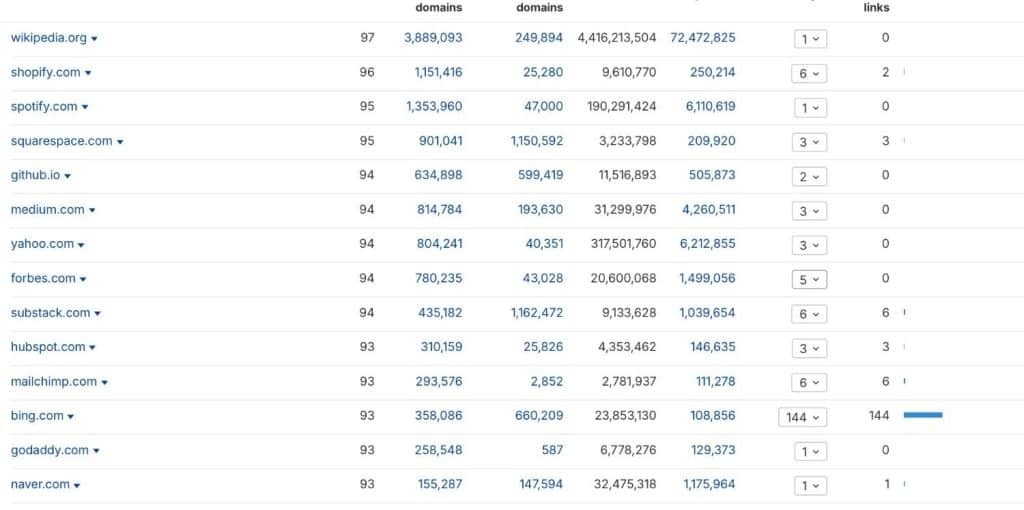
They have earned editorial links from Shopify, GitHub, HubSpot, and Forbes, while attracting four to five new referring domains each month from DR 60 to 90 publications. Many of these links continue to come in without any outreach.
The pattern behind every successful campaign is the type of content being created. Some formats naturally earn more backlinks than others, and original data consistently performs the best.
Original Research and Statistical Properties
Original research earns 4.3x more backlinks than opinion-based content. This reflects what we see in practice. When you create data that no one else has, your research becomes the source others reference when writing about that topic.
This is the foundation of LinkBuild’s approach. Instead of creating opinion-based blog posts or generic guides, we build comprehensive statistical properties. We collect, verify, and organize industry statistics in a way that makes them easy for journalists and researchers to cite.
What this looks like in practice:
For a campaign, a single statistics page earned an editorial backlink from Amazon (DR 96) without a single outreach email. The link was not purchased, negotiated, or requested. Amazon’s editorial team found the page while researching supply chain data and cited it because it provided the information they needed.
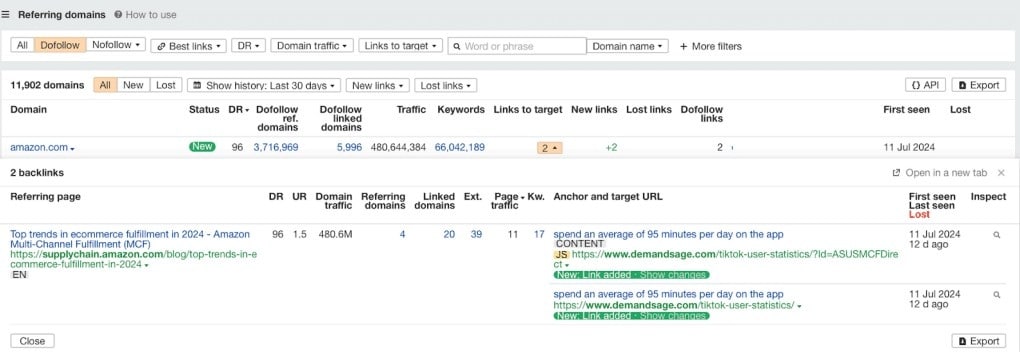
This case study shares one clear lesson: statistical content that is accurate, well-structured, easy to find, and regularly updated can earn the type of editorial citations that most link-building strategies cannot achieve.
If you are considering a data-driven link acquisition strategy, talk to our team about how statistical properties could help your brand.
Ultimate Guides and Educational Resources
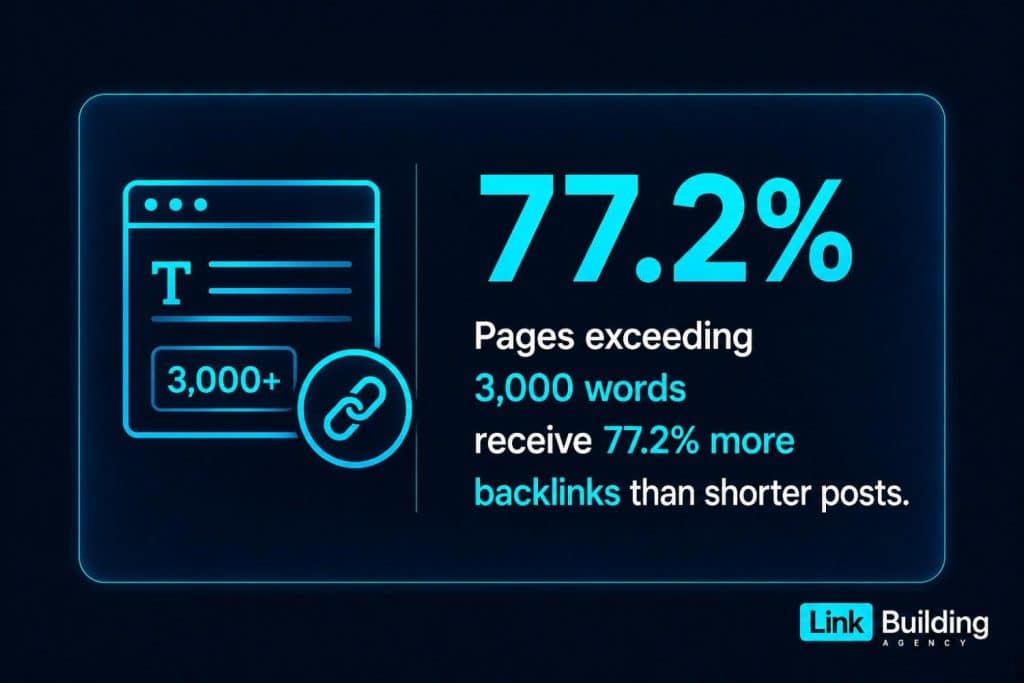
Long-form content earns more links. Pages exceeding 3,000 words receive 77.2% more backlinks than shorter posts. Still, it’s not just about the length. What really counts is how thoroughly you cover the subject.
When we create long-form guides for clients. We follow a clear structure. Each guide is built around a main topic, supported by ten to fifteen related pieces of content that cover specific questions.
Each section of that guide is written in such a way that it can stand on its own and be referenced easily, similar to how we build our statistical properties. We also include expert insights, original frameworks, and real campaign data instead of generic information.
An ultimate guide that answers every question a reader could have, with expert quotes, real examples, and original frameworks, becomes the default reference for that topic.
Free Tools and Calculators
Interactive tools such as calculators and audit tools can earn backlinks naturally for years. Anything that saves time or gives someone an answer without making them do the math themselves grabs attention.
We usually recommend such tools to our clients as they attract links from bloggers, journalists, and educators who embed or mention them.
The investment is upfront (development cost), but they keep earning backlinks over time, making them a strong long-term ROI strategy for brands with technical resources.
Data Visualizations and Infographics
Visual content earns links because it is embed-worthy. A clear chart makes data easy to understand. Visuals travel well because publishers prefer to show a number rather than describe it in a paragraph.
Infographics and data visualizations generate 178% more backlinks than standard blog posts. The mechanism is simple: visual content is embed-worthy. A blogger writing about a topic embeds your infographic and links back. The link is editorial because they chose the visual for their own readers.
We usually use data visualizations as part of our statistical properties rather than creating them as standalone assets. A statistics page with useful and shareable charts gives publishers the original data and the visual format that makes it easier to reference and link to.
Digital PR: The Most Powerful White-Hat Link Building Strategy Today
Digital PR is the practice of earning media coverage from online publications, news outlets, and industry blogs, with the explicit goal of acquiring editorial backlinks and brand mentions.
According to a survey of 518 SEO professionals by Editoria Link, 48.6% rate digital PR as the most effective link-building tactic, ahead of guest posting (16%) and linkable assets ( 12%).
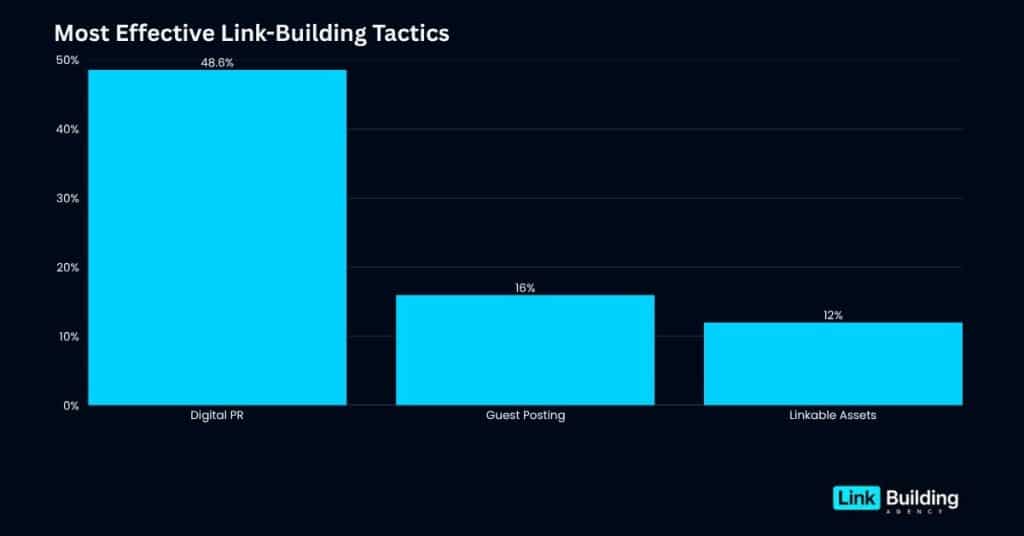
We use digital PR as a primary link acquisition strategy. The reason is simple: when a journalist chooses to reference your data, the link they provide is naturally earned and editorial. That makes digital PR one of the safest and most scalable ways to build authority.
Why Journalists Link to Certain Content
Journalists are not link-building assistants. They link because it makes their story better. That’s the entire framework for understanding what pitches get covered.
Newsworthy content typically shares one or more of the following characteristics:
- It contains data no one else has published.
- It speaks to an ongoing trend or current event.
- It carries a counterintuitive finding.
- It provides a clear visual that enhances the story.
Pitching data-led content is the top digital PR tactic for 95.9% of practitioners. This means that data is the currency that buys coverage.
“Digital PR isn’t a ‘nice to have’ anymore. It’s your AI visibility strategy.” – Keyur Soni. He argues that trusted third-party mentions, expert quotes, and media coverage are becoming critical signals for AI search and answer engines.
How We Build Digital PR Campaigns
Our process follows a consistent pattern across client campaigns:
1. Find the angle where the client’s data meets the journalist’s interest.
The best campaign does not start with “What do we want to promote?” They start with “What data can we produce that journalists in this industry already need?” We focus on what brands want to say instead of what the media wants to cover.
2. Build the data asset before the pitch.
We never pitch content that does not exist yet. The asset, whether it is a statistical report, a data study, or an interactive visualization, is fully created, published, and made live. Journalists need to see the finished product, not a promise.
3. Target journalists who already cover the topic.
We do not send press releases to large media lists. We identify specific journalists who have already covered the topic, review their work, and pitch a data angle that adds value to their coverage. This approach is time-consuming but leads to significantly higher placement rates.
Examples of Successful Digital PR Campaigns
Paris Syndrome
| Aspect | Details |
|---|---|
| Brand | Radical Storage |
| Type | Data Study |
| Campaign | Link |
Radical Storage is a global luggage storage brand. Root Digital found the angle by leaning into a real medical condition: Paris Syndrome.
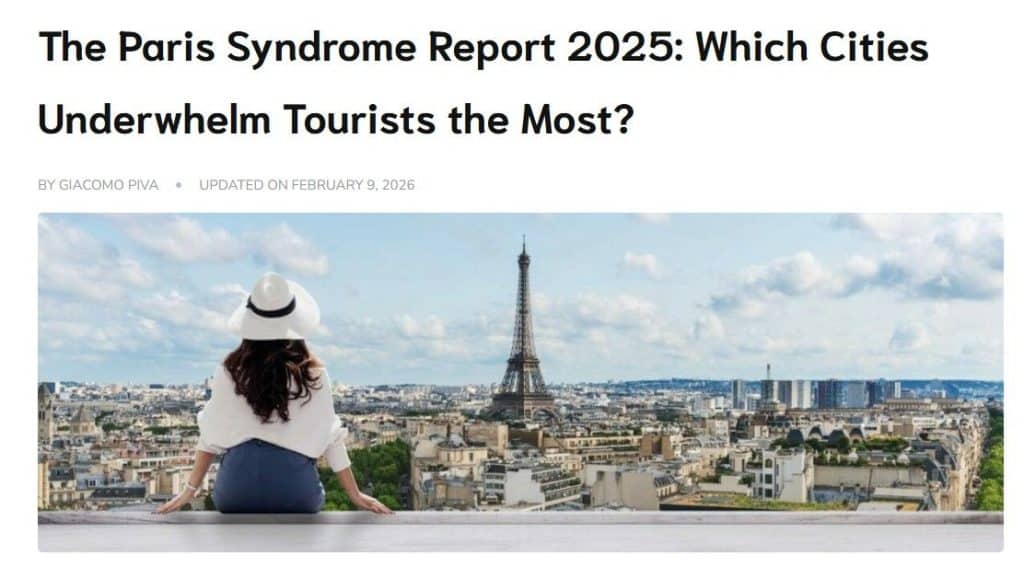
It is where tourists suffer anxiety, hallucinations, and depersonalisation upon discovering Paris doesn’t match their romanticised expectations.
The campaign used online review data to rank the world’s most disappointing tourist cities, the cities most likely to trigger Paris Syndrome.
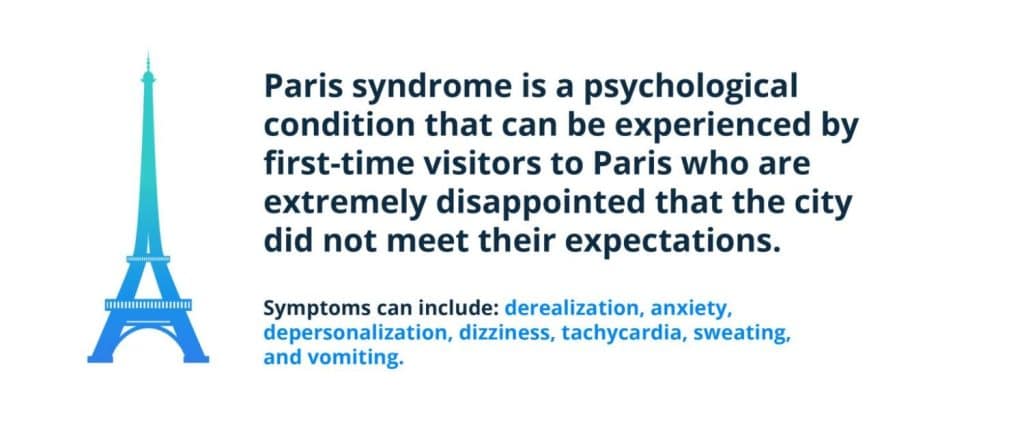
A niche medical concept became an internally relevant ranking piece, and a luggage brand became a quoted source in travel journalism worldwide.
Tactical Lesson: A niche brand can own a broad topic. Radical Storage has nothing to do with tourist disappointment, but the campaign made them the authority on travel expectations, which is directly adjacent to their audience.
WordTips
| Aspect | Details |
|---|---|
| Brand | WordTips |
| Type | Interactive Map |
| Campaign | Link |
When Wordle took the internet by storm in early 2022, WordTips, a word game and puzzle platform, saw the obvious opportunity and moved fast.
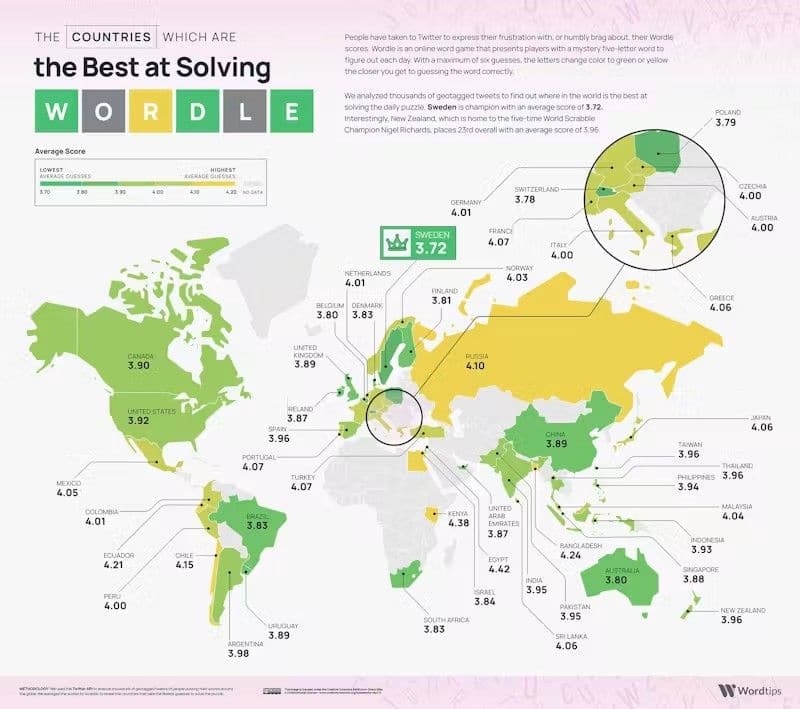
They scraped Twitter/X data to identify average Wordle scores by country, city, and US state, then built an interactive map visualising the results.
The premise tapped directly into Wordle’s existing social dynamic: people were already sharing their results publicly.
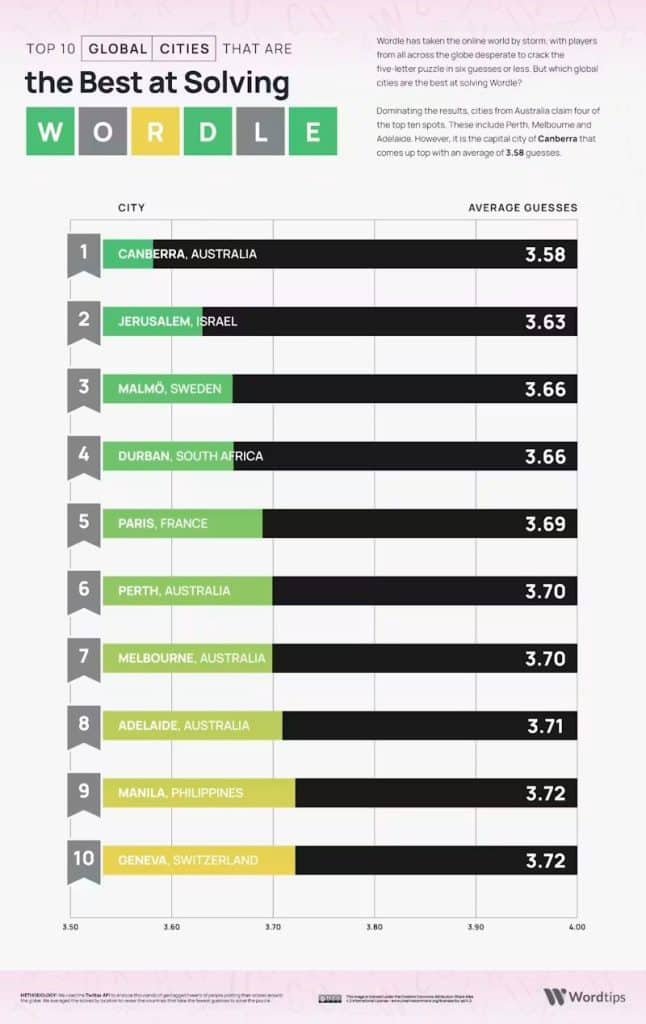
WordTips simply aggregated that competitive behaviour into a leaderboard that everyone wanted to check and share.
Tactical Lesson: Maps are a journalist’s best friend. An interactive map is inherently shareable, visually striking in an article, and gives regional journalists a local angle without extra work on their end.
Guest Posting the Right Way
Guest posting is the second most popular link-building method, used by 38.9% of SEO professionals. But its effectiveness has declined sharply as its abuse has increased. We treat it as a secondary tactic rather than a primary strategy.
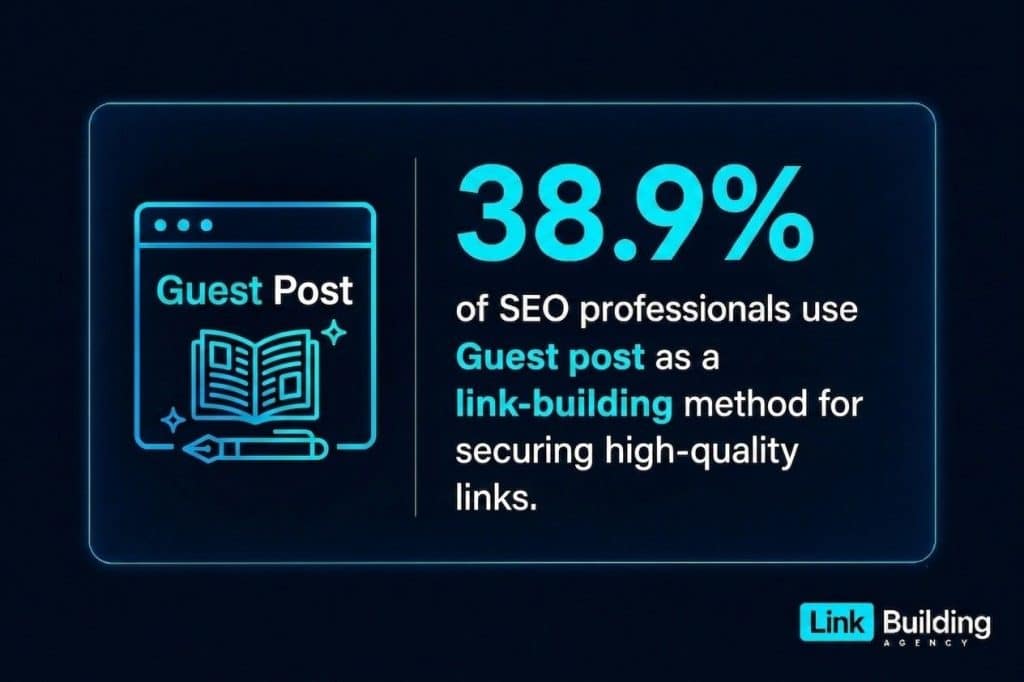
The reason is that most sites that accept guest posts have been flooded with low-quality submissions, making editors more selective and reducing the authority signal of the typical placement.
What remains effective is genuine, expertise-driven guest content that adds value to a publication’s editorial calendar, rather than content created primarily as a vehicle for links.
How We Evaluate Guest Posting Opportunities
We only pursue guest posting for clients when the publication meets three criteria:
- Topical relevance to client’s content
- Real audience (organic traffic, social engagement)
- Editorial standards (they reject pitches, they edit content, they have clear guidelines)
We use Ahrefs Content Explorer to find pages on your target topic with significant referring domains. The sites linking to those pages are your prospecting pool.
Google search operators like ‘write for us’ + your niche keyword also surface opportunities, though you will need to filter aggressively for quality.
At a minimum, we check these before pitching any site:
- DR 40+ with at least 1,000 monthly organic visits
- The site publishes content from real, named authors
- The site links out naturally to sources within its content
- The site has not been flagged in a recent spam update
What Makes a Guest Post Valuable
“If your post gets a lot of traffic, social shares, and comments, the blog owner will most likely accept guest posts from you again.” – Neil Patel
A valuable guest post leads with original insight, cites your own data or case studies where relevant (so the link back makes editorial sense). The link should be a natural byproduct of the content, not its sole reason for existing.
When we write guest posts for clients, we treat the publication’s audience as the primary stakeholders and the link as the secondary outcome.
Mistakes We See Teams Make
- Over-optimized anchor text: Vary your anchor text. A portfolio of exact-match anchors is a penalty flag.
- Posting on irrelevant sites: A link from a cooking blog to a fintech startup sends weak signals at best, suspicious ones at worst.
- Submitting the same article to multiple sites: Duplicate content across domains is both an editorial red flag and an SEO liability.
- Going too thin on topic depth: The March 2024 Google Spam Update specifically targeted low-effort guest post schemes. Thin content in respected publications now triggers manual review.
At LinkBuild.agency, guest posting typically accounts for a small fraction of the links we build for any client. It is useful for specific goals like audience reach and relationship building with publications, but it is not where we concentrate budget when the primary objective is link authority.
Resource Page Link Building
Resource pages are curated lists of links on a specific topic, maintained by educators, industry associations, government bodies, and niche bloggers.
Getting listed on a genuine resource page earns a contextually powerful link from a site that exists specifically to vouch for quality references.
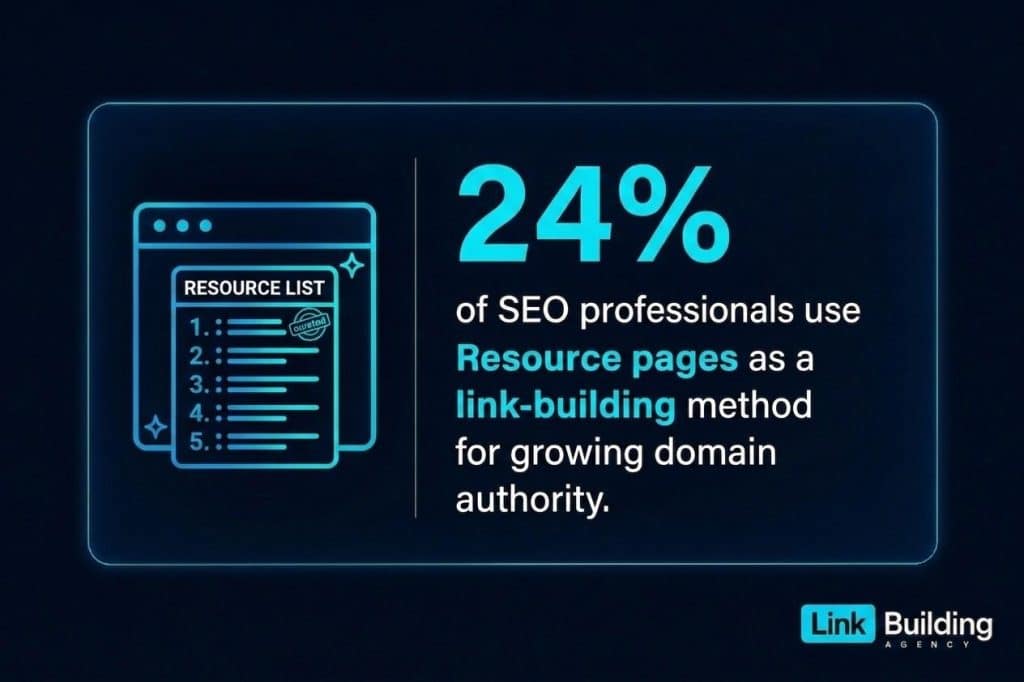
According to a survey done by Aira, 24% of SEO professionals prefer resource page link-building.
The outreach approach is simple: you tell a site owner about your resource, explain why it fits their page, and ask them to consider adding it. Keep in mind that you are not asking for a favor; rather, you are helping them maintain a better resource list.
To find resource page targets, use these search operators in Google:
- “[your topic] resources” or “best [your topic] links”
- “[your topic]” inurl: resources
- “[your topic]” intitle: resources
We use resource page building selectively. It works well when the client has a comprehensive asset, such as a statistics page, a free tool, or a definitive guide, that naturally fits the resource list’s purposes.
Broken Link Building: Turning Dead Links into Opportunities
Broken link-building works because it offers webmasters something genuinely useful: you are helping them fix a problem (a dead link that hurts user experience) and providing a ready-made replacement.
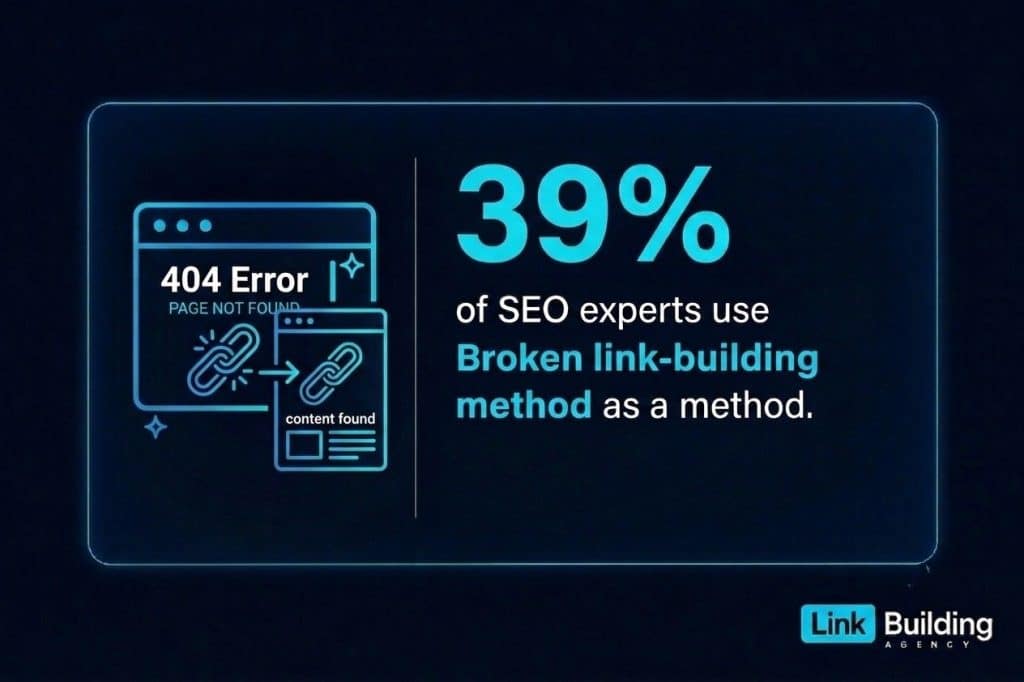
The success rate is significantly higher than cold pitch outreach because broken link-building targets existing relevance. In fact, 39% of SEO experts use this method.
66.5% of the links built over the last nine years are now dead. That decay is your opening. Every broken link is a slot you can fill.
Finding Broken Link Opportunities
Ahrefs Site Explorer is the most efficient tool. Enter a competitor domain or a major resource site in your niche, navigate to the backlinks report, and filter for ‘404 Not Found’ responses. These are live links pointing to dead pages.
Screaming Frog is another option for crawling specific domains. Set it to check external links and filter by 4xx status codes. Export the results and cross–reference with your own content to find matches.
You can also use the Check My Links Chrome extension to scan pages manually for dead links, which is faster for smaller prospecting batches.
The highest value opportunity comes from dead pages that had multiple sites linking to them. If ten publishers are all linked to the same now-dead resource, you can create one replacement piece and pitch all ten.
Creating Better Replacement Content
Your replacement must be as good as the original content it is replacing, and ideally better. Before reaching out, confirm what the dead page covered (using Wayback Machine at web.archive.org is the most reliable method).
If you don’t have existing content that matches, then you have two options: create a new page specifically for this outreach batch (worthwhile if multiple sites link to the same dead resource), or map to the closest existing piece you have.
We often find that our clients’ statistical properties naturally serve as a replacement for dead pages in their niche. This turns our core content strategy into a broken link-building advantage.
Outreach Template
Keep the email short and helpful. Point out the broken link, explain that it is no longer working, then offer your resource as a possible fix. Lead with their benefit.
Sample Broken Link Outreach Email
Subject: Dead link on your [Topic] resources page
Hi [Name],
I was reading your [page] and noticed the link to [resource] returns a 404. I recently published [your resource] that covers the same ground with current data, in case it is useful as a replacement for your readers. Either way, thought you would want to know about the dead link.
[Your Name]
This pitch leads with service (here’s a problem on your site), not a request. The link suggestion is framed as optional. This pattern respects the editor’s time and positions you as helpful rather than transactional.
Brand Mentions and Unlinked Mention Outreach
Sometimes a publication mentions your brand but never links to it. These unlinked mentions are the easiest links to earn because the writer already decided you were worth mentioning.
“If you publish high-quality content which is cited on the internet — and I’m not just talking about links, but also mentions on social media — then you’re doing great.” – Gary Ilyes
The pitch is almost effortless: the site already believes in you enough to mention you. You are simply asking them to make the mention clickable.
Unlinked mention reclamation is part of our ongoing maintenance for every client campaign. The effort-to-reward ratio is one of the strongest in link-building.
How We Find and Prioritize Unlinked Mentions
We use a combination of tools to find unlinked mentions:
- Google Alerts: We set up alerts for your brand name, founder names, and product names.
- Ahrefs Content Explorer: It is our primary tool for systematic prospecting. We search for your brand name and filter by “No links to target” to find pages that mention you without linking.
- Semrush Brand Monitoring: Filters mentions by linking status, allowing us to target the unlinked ones directly.
- Mention.com: Real-time mention tracking across news, social, and forums.
Not every unlinked mention is worth pursuing. We prioritize opportunities based on the referring domain’s authority, whether the mention appears within the main content, and whether the page receives real organic traffic.
Link Building Outreach That Actually Gets Responses
Most outreach fails. Cold outreach has a documented baseline response rate of 8.5%, and 91.5% are ignored. The number of responses can improve dramatically with the right approach.
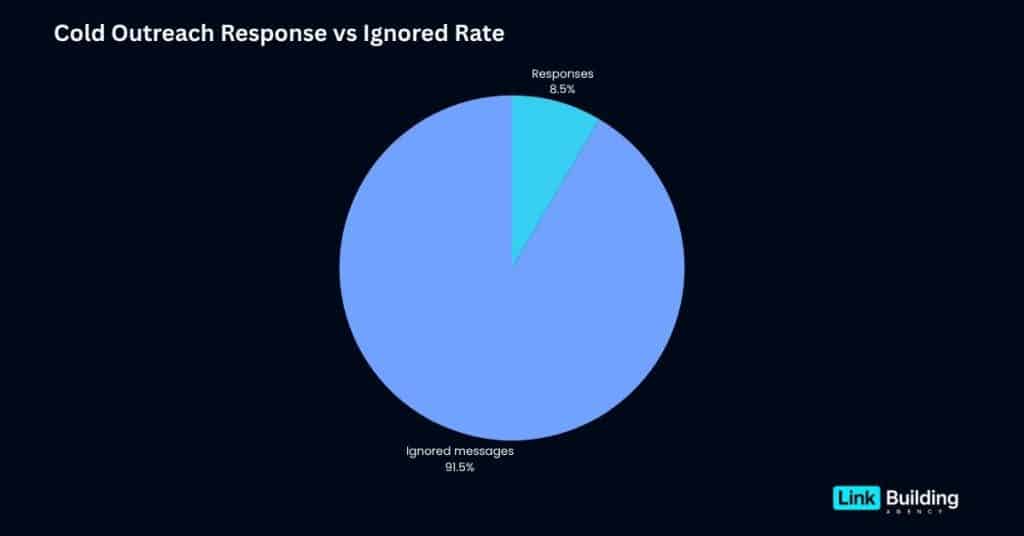
Our outreach response rates run significantly higher than the baseline, and the difference comes down to three things: what we are pitching, how we personalize, and how we follow up.
Asset Matters More than the Email
This is the point most outreach guides skip. The biggest factor in outreach success is not the subject line, email length, or timing. It is whether the asset you are pitching is worth linking to.
When we pitch a statistical property with verified data that a journalist actually needs, the response rate is completely different from when someone pitches a generic blog posting asking for a link swap. No amount of email personalization can make up for a weak asset.
As Eric Ward put it: “The most valuable links will be earned due to deserving content.” Personalization can improve response rates, but even the best outreach cannot consistently overcome weak content.
How We Personalize It
Personalization doubles or triples outreach conversion rates. The challenge is doing it at scale without sacrificing quality.
The solution is a tiered approach: research the top 20% of prospects deeply (read recent content, not specific angles), and apply light personalization (first name, site name) to the remaining 80%.
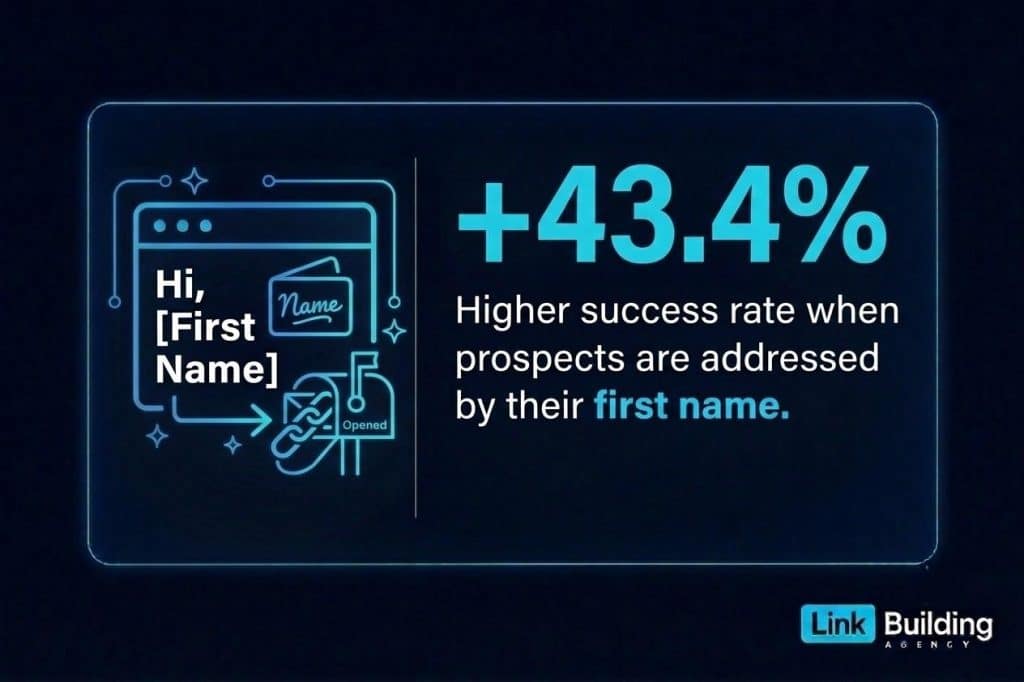
Addressing contacts by their first name alone boosts the success rate by approximately 43.4%. At scale, this single change is one of the easiest wins available.
What we never do is send identical emails to a mass list. Every outreach batch is segmented by topic relevance, and every template is customized for each segment at a minimum.
Writing Effective Outreach Emails
Our outreach emails follow a consistent structure:
1. Subject line under 50 characters: The subject line determines whether your email gets opened. The goal is to look like a relevant email from someone who understands their work, not a pitch from a stranger.
2. Body under 120 words: The opening line references something specific about their content. The second sentence introduces the data point or asset. The third sentence makes the ask: would this be useful as a reference in their coverage? That is it. No long introductions, no excessive praise, and no “I hope this email finds you well.”
3. One clear ask: The recipient should understand what we are offering and why within the first few seconds. If the value is not obvious immediately, the email gets deleted regardless of how well-written the rest is.
Follow-Up Strategies
Most links come from follow-ups, not first emails. Adding at least one follow-up increases replies by about 65.8% in our experience, and most acquired links come from the second or third follow-up.
Our optimal sequence is three follow-ups spaced four to seven days apart. The second email should add new value, like an updated stat, rather than just bumping the thread.
We send outreach Monday through Friday, targeting mid-morning in the recipient’s time zone, usually around 9 to 11 AM.
After three follow-ups, we stop. A fourth or fifth email can damage your relationship with that contact. If the prospect has not responded after three touchpoints, the answer is no, and that is fine. We move to the next opportunity.
Outreach Mistakes to Avoid
- Mass emailing: Identical emails to hundreds of contacts are read as spam and get filtered.
- Pitching without a finished asset: Never pitch content that hasn’t been published yet.
- No clear value: If the recipient cannot see their benefit in the first few seconds, they delete it.
- Over-following up: A fourth or fifth chase damages your reputation and deliverability.
Building Topical Authority and E-E-A-T Through Link Building
E-E-A-T (Experience, Expertise, Authoritativeness, Trustworthiness) is Google’s framework for evaluating content quality. While not a direct ranking factor, it shapes the algorithms that are.
Link building is one of the most direct ways to build the Authoritativeness and Trustworthiness components.
We have seen this happen in a clear pattern: once a client’s content earns enough editorial citations around a topic, the process changes. Instead of needing outreach for every link, journalists and writers begin discovering and citing the content eventually.
This is what happened with our DR 87 data property. Adobe, Wix, and Amazon all cited the resource without a single outreach email. The content had built enough authority to become a trusted reference.
Topic Clusters and Content Depth
A single authoritative piece earns isolated links. A topic cluster, a network of interlinked content covering a subject from multiple angles, earns compounding authority. Each new piece you publish in a cluster reinforces the topical signal of every other piece.
For clients, we build this systematically. We identify the core topic where the client has genuine expertise or data, create a comprehensive pillar page (a statistical property or a guide), and then build ten to fifteen supporting pieces that answer specific sub-questions.
Internal linking between these pages creates a topical map that signals depth to search engines and AI systems.
Expert Contributions and Author Signals
Google’s Quality Rater Guidelines specifically look at the expertise of the content creator. Named authors with verifiable credentials, LinkedIn profiles, publication on other respected sites send strong E-E-A-T signals.
We use expert contributions as a dual-purpose strategy. When we include an expert quote for a client’s content, we notify the expert after publication. Experts often share a link to content that features their insights, creating a natural distribution channel.
How E-E-A-T Supports Sustainable Link Acquisition
Sites with strong E-E-A-T attract inbound link requests, not just outbound outreach opportunities.
When journalists know your site as a credible source for a topic, they come to you for comment, and those expert quotes become editorial backlinks without any outreach cost.
How AI Is Changing White-Hat Link Building
44.2% of practitioners already use AI tools in link building. AI changes the speed of the work, but not the standard for what earns a link.
How We Use AI in Our Workflow
AI has meaningfully accelerated three parts of our process:
1. Prospecting and research: AI tools help us analyze competitor backlink profiles, identify prospecting targets, and summarize the content landscape for a client’s industry faster than manual research. Tasks that once took us days now take only a few hours.
2. Outreach template drafting: AI creates the first draft of outreach templates based on the campaign angle and target segment. The draft is only the starting point, not the final email. A team member reads the target site, identifies the best personalization angle, and rewrites it before sending.
3. Content structure and research synthesis: When building statistical properties, AI helps organize large amounts of source data, identify gaps in existing coverage, and create structured outlines. The original analysis, data verification, and editorial decisions are done by our team members.
The line we draw is simple. AI handles speed and scale, and we handle judgement and quality. AI can help you find a hundred prospects in an hour, but it cannot tell you which ten are actually worth contacting.
GEO, AEO, AIO, and LLMO Explained
These acronyms overlap more than they differ, and each comes down to being a source AI systems trust enough to cite.
| Term | Full Form | Primary Focus |
|---|---|---|
| GEO | Generative Engine Optimization | Getting cited across generative AI engines |
| AEO | Answer Engine Optimization | Becoming the direct answer in featured snippets and AI modules |
| AIO | AI Optimization/AI Overviews | AI-generated overviews at the top of Google search results |
| LLMO | Large Language Model Optimization | Making content parseable by LLMs for conversational AI responses |
AI Content and Link Acquisition Risks
Scaled AI content generation is a link acquisition risk, not an advantage. Google’s policies specifically targeted AI-generated content published at scale without editorial oversight. Sites hit by it lost rankings across their entire domain, not just the AI pages.
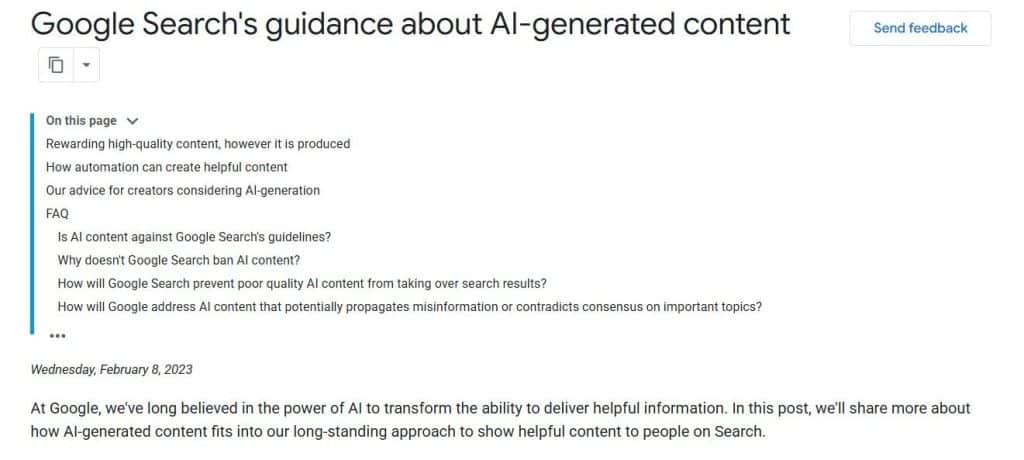
AI-generated content that earns zero backlinks (which is most of it) also drags down the topical authority signals that make your link-worthy content visible in the first place. Quality concentration beats content volume.
Why Human Expertise Still Wins Links
The content that earns the most links contains something AI cannot generate: proprietary data, first-hand experience, original frameworks, and the credibility of a named expert stake in the claim.
The practical implication is to use AI for efficiency (research synthesis, template drafting, structural outlines) and human expertise for the content that actually earns links (the original insight, the data analysis, the practitioner quote).
Measuring Link Building Success: Our Reporting Framework
Links are a means to an end, not the goal itself. A backlink count shows how active a campaign has been, but it does not show whether the campaign is producing business results.
At LinkBuild.Agency, we measure success across five layers, starting with the links themselves and ending with revenue.
Layer 1: Backlink Quality and Growth
We track the Domain Rating distribution of new backlinks, not just the total number. A campaign that earns ten DR 30 links is performing worse than one that earns three DR 70 links.
The metric we monitor most closely is the average DR of new referring domains over time. A steady increase shows that the campaign is consistently earning links from stronger publications.
From our own campaigns, statistical properties regularly attract links from DR 60 to DR 90 websites at a rate of four to five new referring domains each month. This serves as our internal benchmark.
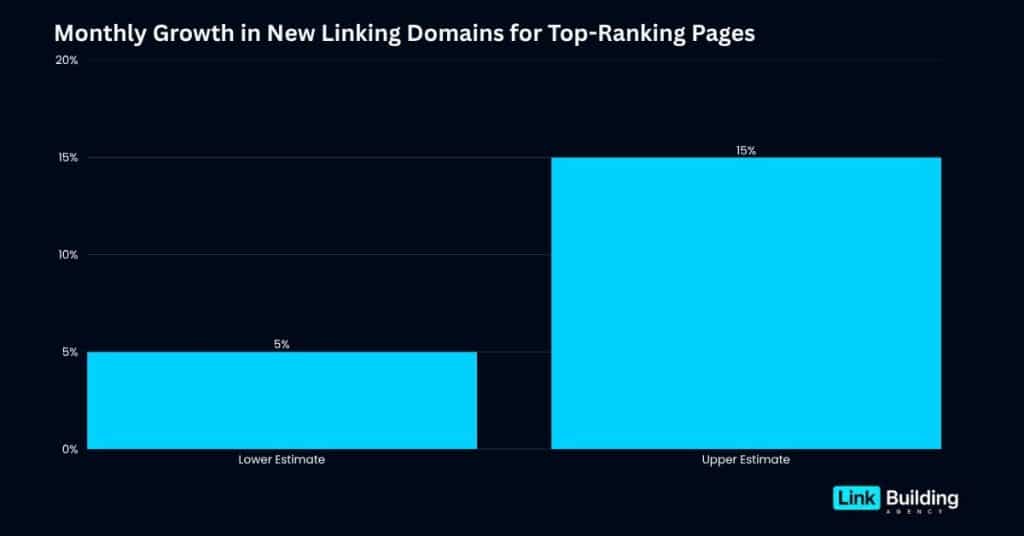
Industry data suggests that top-ranking pages gain followed links from new referring domains at a rate of roughly 5% to 14.5% per month. We use this as a reference point when evaluating whether a client’s link growth is keeping pace with competitors.
Layer 2: Referral Traffic
We monitor referral traffic from every placement to confirm that the link appears on a page people actually read. A link that generates no referral traffic is usually buried on a page with little visibility or little audience, reducing both its marketing value and its SEO impact.
Referral traffic also acts as a quality signal. Links from pages with engaged readers tend to carry more value than links from pages with no meaningful audience.
Layer 3: Organic Rankings and Visibility
We monitor keyword rankings weekly using Ahrefs Rank Tracker, but we evaluate performance over quarterly trends rather than weekly fluctuations.
For every client, we track rankings for the pages receiving links as well as the broader topic cluster because authority flows throughout the connected content.
Layer 4: Brand Mentions and Authority Signals
We track branded search volume in Google Search Console: growing branded search is a signal that your PR and link-building activity is building genuine brand awareness, which in turn feeds AI visibility signals.
For clients focused on AI search visibility, campaigns that generate both editorial backlinks and brand mentions build authority for traditional search and AI systems at the same time.
Layer 5: Conversions and Revenue Impact
We measure organic conversions on pages receiving active link-building support and compare performance before and after the campaign.
For many of our clients, revenue growth is what drives renewals, not the total number of backlinks earned.
White-Hat Link Building Mistakes That Can Hurt Rankings
Even well-intentioned practitioners make errors that undermine their link-building results. Here are the eight most common, with specific guidance on avoidance.
1. Buying Links
Purchasing links is a direct violation of Google’s guidelines and the fastest path to a manual penalty.
Google’s spam team specifically targets paid link networks, and the identified link-purchase schemes are devalued by the algorithm.
2. Over-Optimized Anchor Text
A spike of exact-match anchors is one of the clearest manipulation footprints Google watches for.
Natural link profiles contain a mix of branded anchors, partial matches, generic anchors (“click here,” “learn more”), and naked URLs. Over-optimization is a flag that a link profile has been engineered.
3. Low-Quality Guest Posting
Guest posting on sites with no real audience, no editorial standards, and no organic traffic earns links with minimal SEO value.
Worse, if the site is part of a known guest post network, the links may be actively discounted or flagged.
4. Scaled AI Content Abuse
Publishing hundreds of AI-generated pages to attract links does not work and carries a significant downside risk.
The pages rarely earn links organically (they have no unique insight), and the volume of thin content dilutes the domain’s topical authority signals.
5. Prioritizing Quantity Over Relevance
Chasing link volume from irrelevant domains is a common mistake in budget-driven campaigns.
A DR 80 link from an unrelated industry is worth less than a DR 45 link from a directly relevant publication.
6. Manipulating Link Velocity
Acquiring 200 backlinks in a single month after months of zero activity is a detectable spike.
Natural link profiles grow at a relatively consistent rate, accelerating gradually as content gains traction. Sudden unnatural spikes trigger algorithmic scrutiny.
7. Expired Domain Redirect Schemes
An artificial surge of links can trigger scrutiny, since natural growth is gradual.
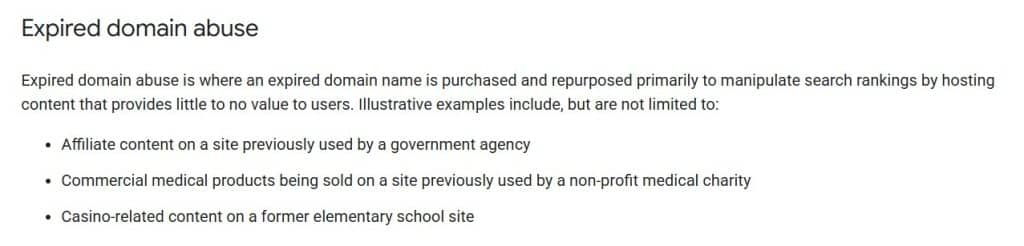
Purchasing expired domains with existing backlink profiles and redirecting them to your site is a grey-to-black hat tactic that Google has explicitly addressed.
8. AI-Refreshed PBNs
Even when AI is used to generate content, it doesn’t make PBNs harder to detect. Google can identify them through network patterns such as shared hosting, interlinked sites, and consistently thin or low-quality topical coverage, rather than relying only on content quality.
Our White-Hat Link Building Tool Stack
Tools don’t directly build backlinks. Instead, they help people do link-building work faster and more efficiently.
| Tool | How do we use it | Pricing | Best For |
|---|---|---|---|
| Ahrefs | Backlink research, DR monitoring, competitor analysis | $129/mo (Lite plan) | Primary research and prospecting |
| Semrush | Backlink audit, brand monitoring, and keyword research | $117.33/mo (SEO plan & Free trial available) | All-in-one SEO teams |
| Moz Pro | Domain Authority tracking, link explorer | $179/mo (Medium plan & Free trial available) | Reporting and authority benchmarking |
| Screaming Frog | Broken link detection, site crawling | Free | Broken link-building prospecting |
| Google Search Console | Internal link data, indexing status, and manual actions | Free | Baseline monitoring for all campaigns |
Note: Most teams do not need all five tools. If you are starting out, Ahrefs and Google Search Console cover 80% of what you need. Add Semrush if brand monitoring and unlinked mention tracking are priorities. Add Screaming Frog when broken link building becomes a regular tactic.
The Future of White-Hat Link Building
Based on what we are seeing across our campaigns, three trends are shaping the future of white-hat link-building.
AI search will continue to shift value toward brand authority signals. The campaigns generating the strongest editorial backlinks, journalists’ citations, and brand mentions are also producing signals that improve AI Overview visibility.
Topical authority will matter more than domain authority. As Google’s systems’ understanding of entities improves, websites with comprehensive coverage of a topic are increasingly outperforming websites with higher DR but no expertise.
Outreach quality will matter even more. AI has made prospecting and template generation accessible to everyone. As a result, content quality and genuine personalization have become the biggest differentiators. Teams that combine AI efficiency with human editorial judgement will continue to outperform teams relying on generic AI-generated outreach.
The core principle will not change: links remain editorial trust signals, and editorial trust is earned by creating content that genuinely deserves to be cited. The tools, distribution channels, and reporting methods will continue to evolve. The foundation will not.
FAQs
Yes. The links last, survive updates, and compound, while shortcuts get wiped out. With most pages holding zero backlinks, even modest ethical link growth creates a real edge.
Expect three to six months before rankings clearly move, and longer in competitive niches. Links work gradually, since Google needs time to trust and weigh them.
There is no fixed number. Relevance and quality matter more than count, and the right benchmark is the link profiles of the pages already ranking for your target terms.
Yes, for prospecting, sorting, and drafting outreach. It cannot create the original idea or relationship that earns the link, so treat it as an assistant, not the strategy.
Yes, when the post is genuinely useful and the site is relevant with real traffic. Thin posts on unrelated sites are now a liability rather than a help.
Earning links with original data and digital PR. When a journalist chooses to cite you, the link is editorial by definition, which is the safest kind there is.
Publish assets people cite on their own: original research, free tools, and statistics pages. They earn passive links for years, though some outreach always speeds the first wave.