Backlinks still matter, but getting them is no longer as simple as publishing a page and waiting for other sites to notice. The best links now come from content people want to reference, stories worth covering, and outreach that reaches the right people.
Pages with backlinks get about 3.8 times more organic traffic than pages without them, while 96% of the content gets no backlinks at all. That gap shows just how much room there is to stand out.
Spending more doesn’t automatically mean getting better results. The real questions are which strategies earn the strongest links, how many backlinks you actually need, and whether links matter as AI changes the way people search.
This article breaks down the numbers behind link-building in 2026, from costs and ROI to digital PR, content, outreach, link decay, and AI search.
Link Building Statistics 2026: Key Takeaways
- The link-building market is expected to grow from $25.976 billion in 2025 to $57.07 billion by 2030.
- The #1 Google result has about 3.8x more backlinks than results ranked 2 to 10.
- 78.1% of SEO professionals report a positive ROI with link building, with results usually appearing within 3 to 6 months.
- 48.6% of SEOs say Digital PR is the most effective strategy for link building, compared with 16% for guest posting.
- Long-form content gets 77.2% more backlinks, while original research earns 3.2x more links than opinion or how-to content.
- Brand mentions have a 0.664 correlation with AI Overview visibility, compared with 0.218 for backlinks.
Link Building Market Size
Link building is no longer just a side task. It is a multi-billion-dollar industry with dedicated tools and services.
1. Link building services were worth about $25.97 billion in 2025, showing just how much businesses are already spending on getting quality links.
2. That market is expected to reach nearly $57 billion by 2030, meaning spending on link-building is set to grow significantly over the next few years, as shown in the table below.

| Year | Link-building Market Size |
|---|---|
| 2030 | $57.07 billion |
| 2029 | $48.69 billion |
| 2028 | $41.58 billion |
| 2027 | $35.51 billion |
| 2026 | $30.32 billion |
| 2025 | $25.97 billion |
3. Link building software was worth around $2.8 billion in 2025 and is growing by about 11% each year, giving businesses more tools to find, build, and manage links.
The takeaway is simple: businesses are putting more money into link-building because links still matter. If your competitors are investing in it and you are not, you are giving them an advantage to rank better than you.
Source: Xamsor, DataIntelo
Do Backlinks Still Matter in 2026?
Yes. Backlinks still matter in 2026. Google still uses links as part of its ranking systems, and pages with strong backlink profiles tend to perform better in search.
4. Google confirms that link analysis systems, including PageRank, are still part of its core ranking systems.
5. Pages with at least one backlink are 77% more likely to reach the top 10, showing a clear connection between backlinks and higher search rankings.
6. The #1 result has about 3.8 times more backlinks than pages ranked 2 to 10, which shows how much stronger the backlink profiles of top-ranking pages can be.
This shows that backlinks are not dead. They are simply harder to earn, more competitive, and more expensive than before.
Source: Google, RankTracker, Backlinko
How Many Backlinks Do You Need to Rank?
Your goal shouldn’t be to collect as many backlinks as possible. Focus on referring domains, meaning the number of websites linking to you. Ten links from one website are not the same as ten links from ten different websites.
7. About 96% of the first-page results have 1,000 referring domains, showing how important a broad link profile can be in competitive searches.
8. At the same time, roughly 66% of pages have no backlinks at all. So even a small number of quality links can give you an edge.
9. Top-ranking pages add new referring domains at around 5% to 14.5% per month, which shows that link-building is an ongoing process, not a one-time job.
10. Sites with 30 to 35 high-quality backlinks can bring 10,500+ organic visits per month, showing that quality can matter more than chasing huge link counts.
11. Sites that publish content regularly get 97% more backlinks than sites that publish occasionally. More useful reasons give other websites more reasons to link to you.
You can set a monthly referring-domain target instead of chasing a total number of links. Then keep publishing useful content so you have more chances to earn those links naturally.
Source: Search Engine Land, Ahrefs, Ahrefs2, PressWhizz, HubSpot
How Much Does Link Building Cost in 2026?
A quality backlink now costs around $509 on average, so it helps to know what you are paying before setting your link-building budget.
12. The average price of one high-quality backlink is about $508.95, giving you a useful benchmark when comparing link-building costs.
13. Nearly 47% of SEOs are willing to pay $500 or more for a high-quality backlink. So paying a few hundred dollars for a strong backlink isn’t unusual.

The cost varies depending on the link type. You can refer to the table below for any quote you get.
| Link type | Price |
|---|---|
| Standard Guest Post | $365 |
| High-quality guest post | $692 – $957 |
| Premium guest post | $2,500 – $3,000 |
| Niche edit/link insertion | $361.44 |
| Digital PR | $6,000 – $20,000 per campaign |
If you are in a competitive niche and spending less than $1,000 a month, expect slower results. You can either increase your budget or start by targeting easier keywords.
Source: Editorial.link, BuzzStream, Reporter Outreach
Link Building ROI Statistics
Link building usually takes time to show results. Most SEOs see results, just not overnight.
14. About 78.1% of SEO professionals report a positive ROI from link-building, showing that the investment can pay off when done well.
15. Results usually start showing within three to six months, rather than a few weeks. Rankings and organic traffic need time to build.
What this means for you: give a link-building campaign at least a few months before analyzing the results. Look at month four, not month one. Set the expectation from the start, and the ROI conversation becomes much easier.
Source: Editorial.link, Authority Hacker
Most Effective Link Building Strategies
Digital PR is the most effective link-building strategy, while guest posting remains the tactic most link builders use regularly.

| Strategy | Value |
|---|---|
| Digital PR | 48.6% |
| Guest Posting | 16% |
| Linkable Assets | 12% |
| Backlink Exchange | 9.3% |
| Niche Edits | 4.6% |
| HARO link building | 4.1% |
| Other | 5.4% |
16. Guest posting is used by 64.9% of link builders, mainly because it is predictable and easy to scale.
17. Broken link building gets a link about 5 times more often when you offer a relevant replacement. It works because you are helping the site owner fix an existing problem.
18. The skyscraper method converts around 11% of outreach into a place link. The idea is simple: create something better than what already ranks, then reach out to the sites that are linked to the older content.
You can use guest posting for steady link volume, then add digital PR when you want bigger authority wins. That combination gives you both consistent results and opportunities for high-impact links.
Source: Editorial.link, Authority Hacker, Backlinko, Backlinko 2
How Digital PR Is Replacing Traditional Link Building
Digital PR is changing how brands build links. Instead of chasing sites one by one, a single strong story can earn links from dozens of websites.
19. The digital PR market was worth about $36.48 billion in 2025 and is expected to reach nearly $39.64 billion in 2026.
20. By 2031, the market is forecast to reach around $60.20 billion at a CAGR of 8.72%, showing how quickly brands are investing in digital PR.
21. Around 78% of SEOs say digital PR delivers better ROI than traditional outreach, which helps explain why more teams are shifting their budgets toward it.
22. A typical digital PR campaign earns links from about 42 websites, with more than 20% coming from domains rated 70 to 79, giving campaigns a chance to earn links from strong sites at scale.
23. About 95% of digital PR professionals build campaigns around original data, such as surveys, studies, and new datasets. That gives journalists something useful to report and link to.
You should stop pitching opinions alone. Give reporters something they can use. Run a survey, publish original research, or create a fresh dataset with a clear story behind it.
Source: Modor Intelligence, Designrush, AllOutSEO, Reporter Outreach
Outreach Statistics Every SEO Should Know
Outreach is a numbers game, but sending more emails isn’t the answer. Reply rates are low, so relevance and smart follow-ups matter.
24. Out of 12 million outreach emails, only 8.5% received a reply. This shows how hard it is to get attention in a crowded inbox.
25. Average cold email reply rates have dropped to around 3.43%, making it even more important to get the message right.
26. A single follow-up can increase replies by 65.8%, so following up once can make a big difference.
27. About 73% of journalists reject pitches because they don’t fit their beat, which means sending the right pitch to the right person matters more than sending hundreds of emails.
These numbers mean that you should send fewer but sharper pitches. Make sure the topic matches what the writer actually covers, then follow up once. That will get you further than sending a huge list with the same message.
Source: Backlinko, Prospeo, PR Daily
Content that Earns the Most Backlinks
Data and depth are what make content worth linking to. Quick opinions rarely have the same impact because there’s often nothing new for others to reference.
28. Long-form content of around 3,000 words or more earns 77.2% more backlinks than shorter articles. The more useful and in-depth the content is, the more likely people are to reference it.
29. Original research and data studies perform even better, earning 3.2 times more links than opinion or how-to posts. That is because writers are always looking for reliable numbers and findings they can cite in their own content.
30. Infographics can also help, generating 178% more backlinks than standard blog posts. They turn useful information into something easy to understand, share, and reference.
The key is to create content that gives people something they can use. Whether it is original data, a useful finding, or a well-designed infographic, make your content worth citing.
Source: Backlinko, ALM Corp, The HOTH
Link Building and AI Search
AI search is changing what makes a brand visible. It isn’t just about getting links anymore. Being mentioned can matter too.
31. Across 75,000 brands, brand mentions had a stronger correlation with visibility in AI Overviews at 0.664, while backlinks were closer to 0.218.
32. That doesn’t mean backlinks no longer matter. About 76% of the pages quoted in AI Overviews already rank in the top 10, which suggests strong Google rankings can still help you get cited in AI.
33. At the same time, 4% of AI search users now consider AI their main source of information. As more people turn to AI for answers, getting your brand mentioned across trusted sources becomes increasingly important.
One thing to keep in mind: these numbers show a connection, not a direct cause. Bigger brands naturally get more mentions, more links, and more visibility in AI search. So, brand mentions may not be the only reason they appear more often.
The takeaway is simple: keep building links to improve Google rankings, but start earning more brand mentions to improve your chances of showing up in AI search.
Link Building Statistics by Industry
Some industries are easier to build links in than others. While certain niches are more open to linking, others require more trust before they link to your content.
Easiest Industries for Link Building
34. The three easiest verticals for link-building are Beauty/personal care, Marketing or PR, and Leisure or Sports.
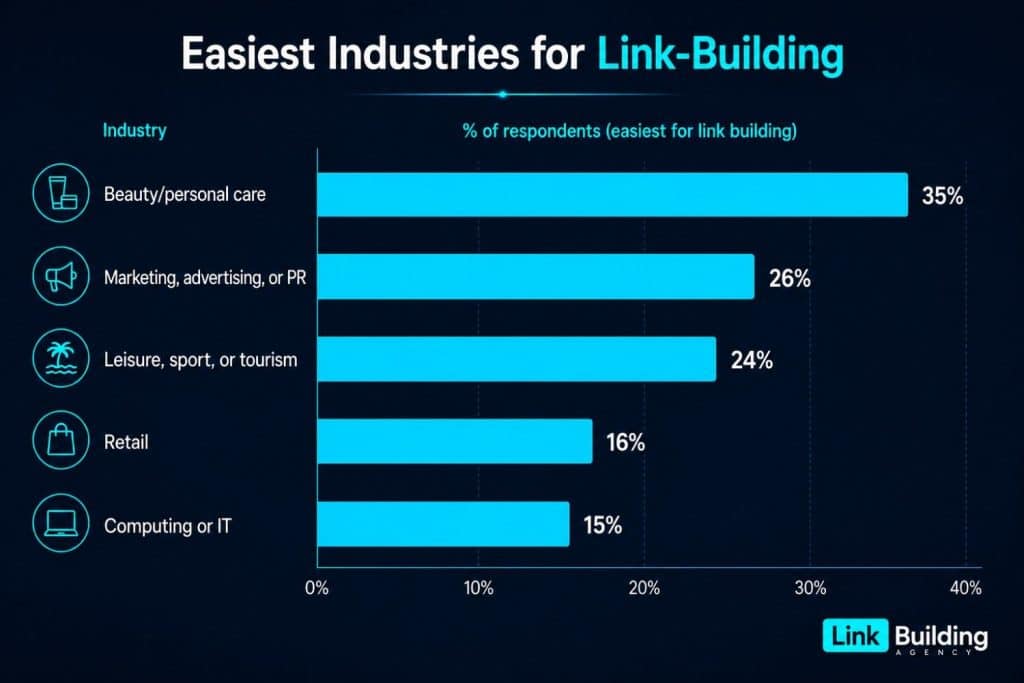
| Industry | % of respondents |
|---|---|
| Beauty or personal care | 35% |
| Marketing, advertising or PR | 26% |
| Leisure, sport or tourism | 24% |
| Retail | 16% |
| Computing or IT | 15% |
Hardest Industries for Link Building
35. iGaming and online betting (61% of the respondents) require the largest link-building budgets.
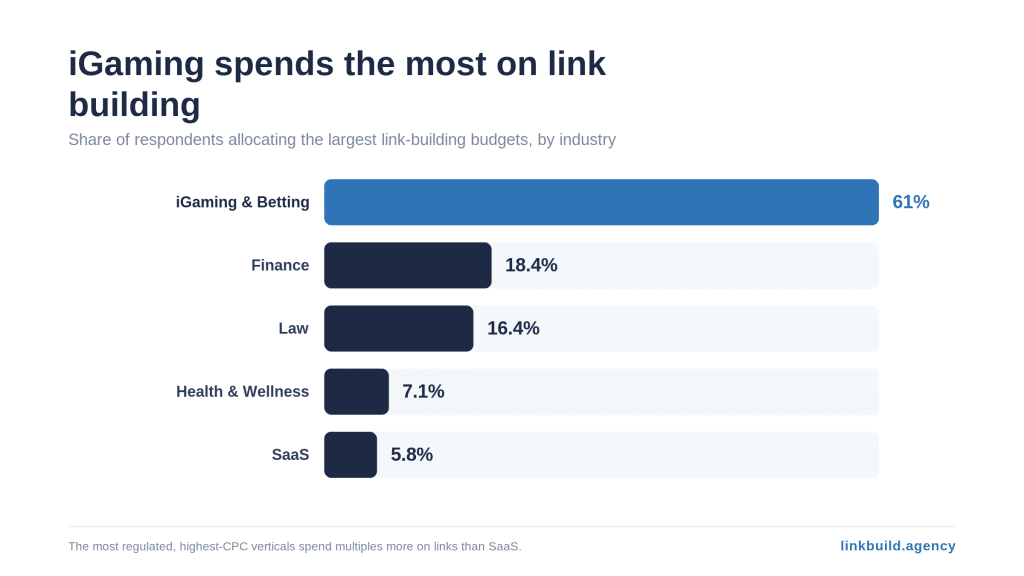
| Industry | % of respondents |
|---|---|
| Healthcare or pharmaceuticals | 31% |
| Accountancy, banking or finance | 25% |
| Law | 21% |
| Gaming | 18% |
| Engineering or Manufacturing | 13% |
If you work in a harder niche, link-building may take more time and money. Original research and useful data can make it easier because they give people a strong reason to trust and reference your content.
Source: Aira
Link Decay and Risk Statistics
Two things worry site owners when it comes to backlinks. Links disappearing and bad links hurting their rankings. The good news is that the risk isn’t as bad as many people think.
36. Of the 14 billion links tracked over nine years, about 66.5% disappeared, while roughly 7% vanished within the first year. This shows that backlinks don’t last forever, so some link loss is normal.
37. Google also mostly ignores bad or spammy links instead of penalizing your site for them.
Remember that links naturally disappear, so keep building new links to replace the ones you lose. But there’s no need to panic over every bad link.
Other statistics to check out:
Link Building Case Studies Worth Studying
Numbers show you what works, but real campaigns show you how it works. Here are some case studies worth studying, along with the results they achieved.
1. DemandSage: The Linkable Asset Brand That Scaled to DR 87
DemandSage wanted to move beyond a typical statistics page that ranks for a few keywords and fades out. The goal was a data asset that journalists, marketers, researchers, and content teams would return to whenever they needed verified industry statistics.
Instead of publishing opinion-based content, we built a data property with trustworthy statistics, cited original sources, and an easy-to-reference format. As more publishers found the resource, backlinks came in naturally because the page solved a genuine problem.
The page grew into a property with a Domain Rating of 87, with organic citations driving most of that authority. The strongest signal of success was not the DR score. It was the quality of sites choosing to cite the content without any outreach.
Adobe (DR 96) referenced the statistics across 3 different articles, generating 25 backlinks from a single referring domain. Amazon worked the research into 2 supply chain-related resources, adding further weight to the dataset’s credibility. None of these were sponsored placements, guest posts, or link exchanges. They were editorial citations earned purely on merit.
The campaign worked because it served multiple search intents at once, useful for marketers, journalists, SaaS teams, and researchers alike. It shows that sustainable link building starts with content people trust enough to reference on their own. You can check out more details of our DemandSage and other linkable assets with our guide here.
2. Backlinko: The Skyscraper Technique
Brian Dean wanted to increase organic traffic and earn high-quality backlinks for Backlinko. He chose a popular page about Google’s ranking factors and used it as the starting point for a better piece of content.
He created a more complete and up-to-date version with 200 ranking factors, then found websites that were already linking to similar content. He reached out to 160 relevant prospects and showed them his improved resource.
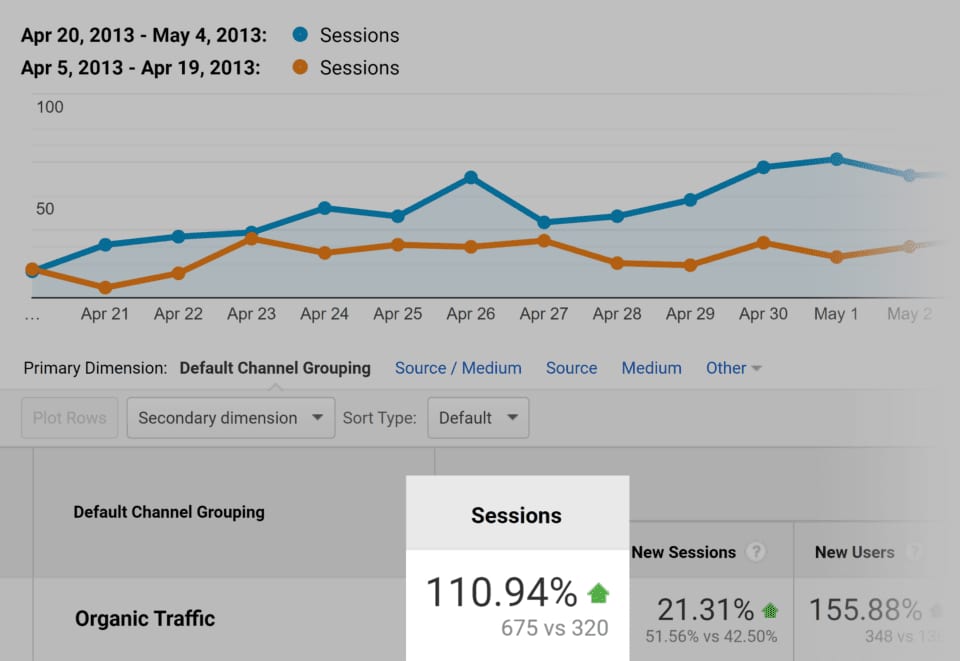
The results were strong. He earned 17 backlinks from those 160 emails, an 11% success rate. More importantly, organic search traffic to the entire site doubled in just 14 days.
The campaign worked because he didn’t start from scratch. He found content that was already attracting links, made it better, and then contacted people who had already shown interest in the topic.
3. Digiloft: The Ageing Jobs Calculator
Digiloft wanted to earn high-quality editorial links for the Harley Street Skin Clinic while also increasing brand awareness and enquiries. They looked at a common concern for the clinic’s audience, ageing, and asked a simple question: could your job be making you age faster?
They turned that idea into an interactive Ageing Jobs Calculator. Users answered questions about their work, including stress, shift patterns, work environment, and physical activity, and received an ageing score with personalized insights.
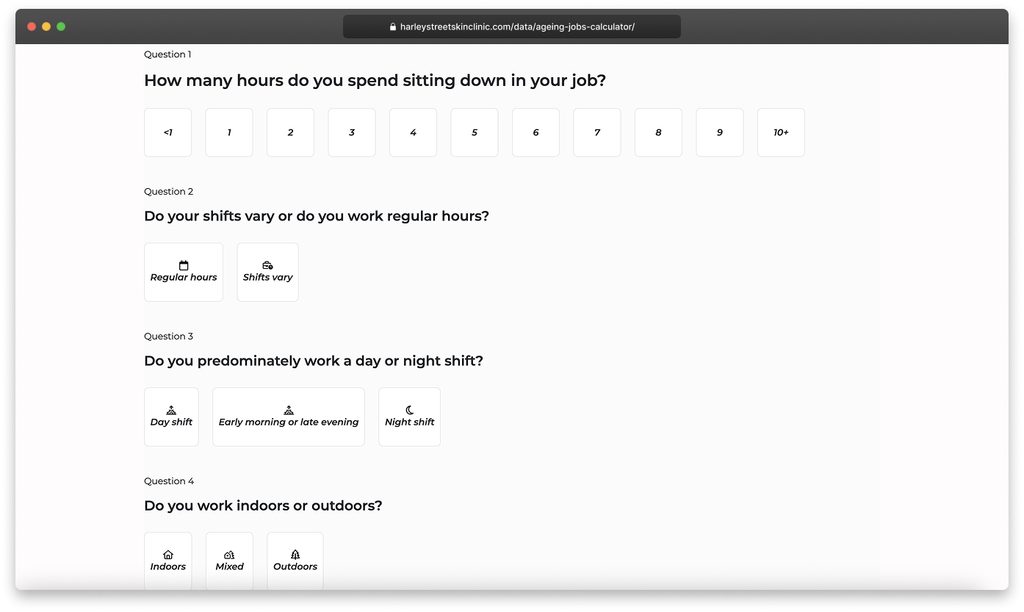
Source: Digitloft
The campaign earned 53 pieces of media coverage and 48 high-authority backlinks, with an average DR of 72. It also brought more than 75,000 sessions to the campaign page and increased enquiries by 1,900% in the first week.
It worked because the campaign turned a familiar topic into something interactive and newsworthy. People could use the calculator for themselves, while journalists had an interesting story and data to cover. That gave Digiloft both something people wanted to use, and something publications wanted to talk about.
What do these campaigns have in common?
They didn’t rely on buying links. They created something useful, original, or interesting enough to earn attention, then made sure the right people saw it.
That is the core of effective link-building. Create something worth linking to, put it in front of the right audience, and keep doing it consistently.
The Future of Link Building
Link building is becoming more important, but the way we measure success is changing too.
38. Around 58% of teams increased their link building budget for 2026. At the same time, SEO success is no longer just about rankings and traffic.
As SEO expert Aleyda Solis highlights, brands also need to look at how often they appear in AI answers and across other search platforms. This gives a clearer picture of how visible a brand really is.
So, focus on both links and brand mentions. Then measure how they improve your visibility across traditional and AI search.
Source: Reporter Outreach