You hire an agency. They promised results. Three months later, your backlink profile looks good, but your rankings haven’t improved.
This happens more than you’d think. Only 29% of SEO teams rate their own link-building as successful. And the agencies that caused that number have something in common: they were easy to hire and hard to fire.
Most clients come to us after a bad experience with another agency. They have already spent months and budgets on link-building campaigns that failed to make an impact.
This guide gives you a repeatable framework to avoid that scenario. We have covered six agency models, an 8-point evaluation scorecard, 12 questions that separate real partners, and a 30-day vetting process you can run before you sign anything.
The Real Cost of Choosing the Wrong Link Building Agency
The wrong agency doesn’t just waste your budget. In the worst case, manipulative links can trigger a Google manual action, specifically the “Unnatural links to your site” penalty.
It demotes or removes the affected pages until you identify the bad links, remove them, and pass a reconsideration request. In severe cases, some site owners resort to migrating to a fresh domain.
Beyond the technical impact, there is also the risk of reputational damage to a domain that you may have spent years building.
Three things the wrong agency actually costs:
- Budget: Monthly retainers typically range from $3,000 to $15,000. When invested in the wrong agency, that can translate to $36,000–$180,000 per year with little to no return.
- Rankings: When Google’s SpamBrain AI detects manufactured links, it usually just ignores them. This means the links provide no value. You paid for links that do not improve your rankings while competitors move ahead. In some cases, these links can also lead to penalties that cause your rankings to drop.
- Time: Recovery from a link-related penalty can take 6–12 months on average, during which competitors continue to move ahead.
The good news is that every bad agency leaves clear warning signs before you commit any budget. The key is knowing what to look for before it’s too late.
Do You Actually Need a Link Building Agency?
Before evaluating any agency, ask an honest question: Do you even need one right now?
Outsourcing link-building before your site is ready is one of the most expensive mistakes in SEO.
In-House vs Freelancer vs Agency: Honest SEO Trade-offs
Building in-house costs an average of $5,000-$15,000 per month in combined salaries and tool subscriptions.
Agencies usually deliver better results for the same cost because they already have publisher relationships and outreach systems in place.
That said, 56% of SEOs outsource at least part of their link-building. The remaining 44% keep it fully in-house, usually because they operate in niches where existing relationships already cover most needs.
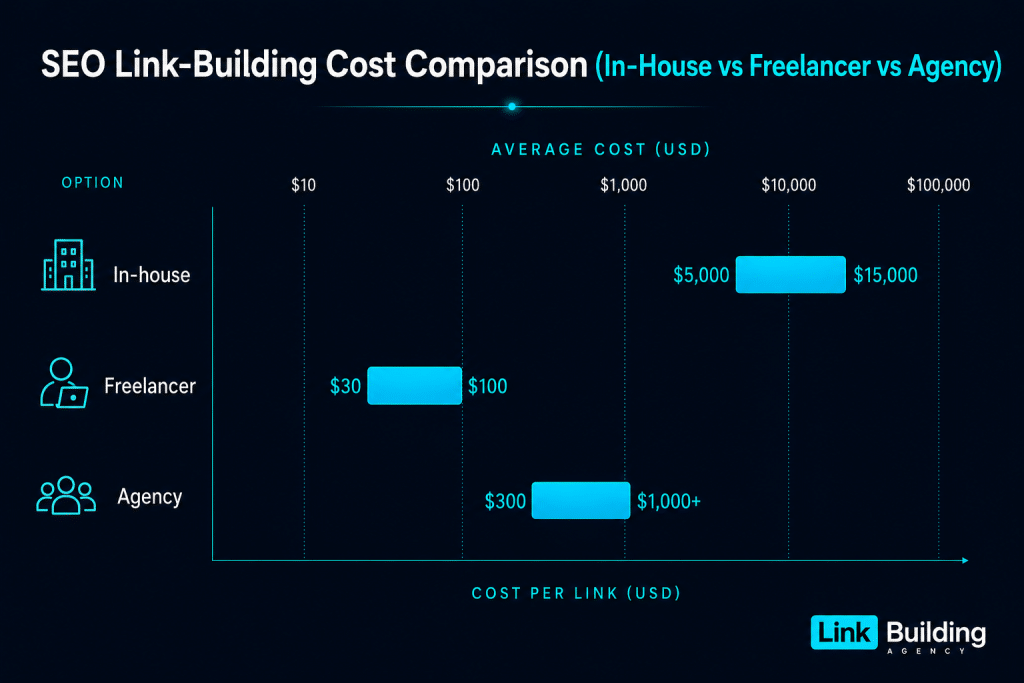
| Option | Best for | Avg. Cost | Key Trade-off |
| In-house | Large teams, volume content operations | $5,000-$15,000 | High control, high overhead |
| Freelancer | Early stage, tight budget | $30-$100/link | Variable quality, hard to scale |
| Agency | Growth-stage, competitive niches | $300-$1,000+/ link | Best ROI per dollar at scale |
Signs You Are Ready to Outsource Link Building
You need a consistent link velocity of 10 or more links per month to compete in mid to difficult niches.
- You are publishing content regularly, but the links are not working.
- You have a content team, but no outreach infrastructure or publisher relationships.
- Competitors are outpacing you with new referring domains, and you have no internal bandwidth to close the gap.
- You have already validated your conversion funnel and know organic traffic converts.
- You can afford a 3-6-month minimum as agencies can’t show results in 30 days.
When Not to Hire an Agency
Agencies cannot save a site that has technical issues. Fix them first, or the links will not move rankings.
- Core Web Vitals are failing, or page speed is below the industry benchmark.
- You have no clear content-to-conversion funnel. Links without landing pages are traffic without a destination.
- Your site has fewer than 20–30 pages of meaningful content that search engines can index.
- You have an active manual penalty or a significant toxic link profile that has not been addressed.
The 6 Types of Link Building Agencies in 2026 and How to Choose the Right One
Not all agencies do the same thing. Choosing the wrong model wastes money even if the agency is technically competent.
Full-Service Link Building Retainer Agencies
These agencies handle everything from prospecting, outreach, content creation, placement, and reporting. You pay a monthly retainer and receive a set of placed links.
Link Building Marketplaces and On-Demand Platforms
Platforms like WhitePress, Respona, Pitchbox (as a tool), or niche content marketplaces let you buy individual placements. You choose the site, approve the content, and pay per link.
Best fit: Teams with strong SEO knowledge who want to supplement an existing strategy with targeted placements. Requires internal vetting skills.
Digital PR and Authority Link Agencies
These agencies pitch original data, expert commentary, and story angles to journalists and editors. The links earned are editorial and on high-authority publications. And this is one of our areas of expertise at Linkbuild.agency. Beyond doing it for clients, we have also earned backlinks on autopilot. And how did we do it? Through Linkable assets. Check out our detailed linkable assets case study to learn all the details
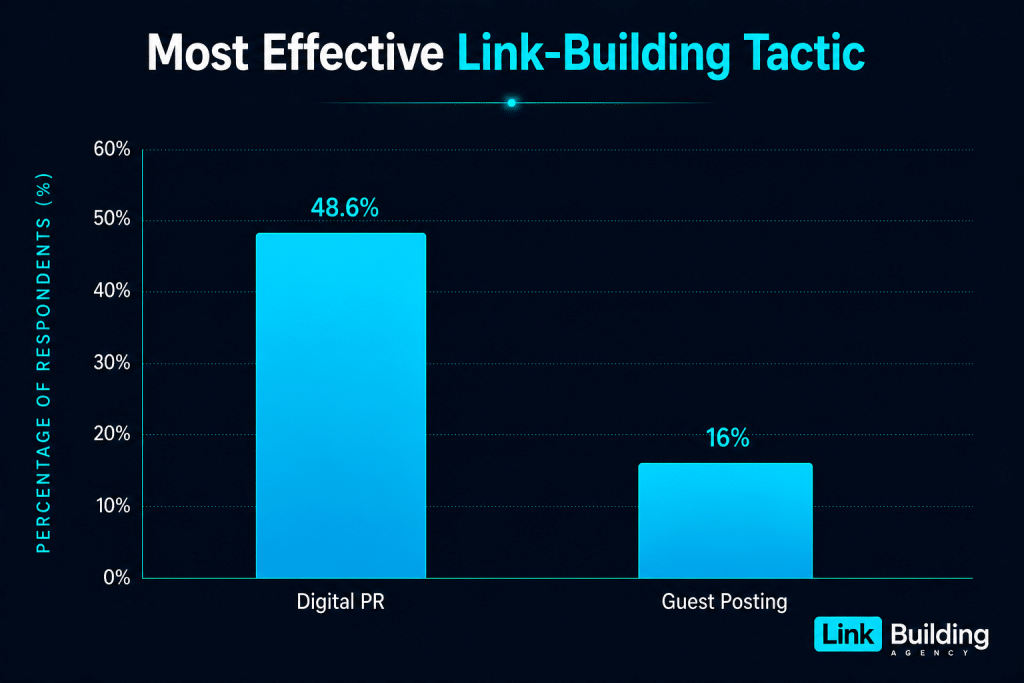
Digital PR is now rated the most effective link-building tactic by 48.6% of SEO professionals. The gap with traditional guest posting (16%) is large and growing.
White Label and Wholesale Link Providers
These providers supply links to other agencies. They typically work at volume and do not communicate directly with the end client.
Niche-Specific Link Building Specialists
These are the agencies focused on a single vertical, such as SaaS, e-commerce, finance, legal, healthcare, or any other. They have existing publisher relationships and domain knowledge in that sector.
Hybrid SEO + Link Building Agencies
Full-service SEO agencies that include link-building as one component of a broader engagement. Link volume is often lower but integrated with on-page and technical strategy.
The table below compares the link-building agency models.
| Model | Avg. Quality | Control Level | Avg. Price Range | Best Fit |
| Full-service retainer | High | Medium | $3,000-$15,000/mo | Growth stage, competitive niche |
| Marketplace/on-demand | Variable | High | $100-$500/ link | Experience with in-house SEO teams |
| Digital PR agency | Very high | Low-Medium | $5,000-$20,000+/mo | Brands’ authority + AI visibility |
| White-label/wholesale | Medium-low | Low | $400-$1,000/ link | Agency and resellers only |
| Niche specialist | High (in vertical) | Medium | $3,000-$12,000/mo | Regulated or specialist industries |
| Hybrid SEO + links | Medium-high | Medium | $4,000-$20,000/mo | Teams needing full-service SEO |
The 8-Point Framework to Evaluate a Link Building Agency
Apply this framework to every agency you shortlist for link-building. Score each criterion from 1 to 5. Any agency scoring below 30 out of 40 should not be considered for your final shortlist.
1. Link Acquisition Strategy and Transparency
Ask the agency how they build links. Their answer will tell you everything you need to know.
Good agencies will clearly explain their approach, such as editorial outreach, broken link building, or original data campaigns. They will name the types of sites they target and explain how they evaluate publishers.
If they respond vaguely with phrases like “we have a proprietary network” or “we focus on organic methods” without specific details, that is a clear warning sign.
To verify, ask for three live samples from their recent client work, then pull each linking site in Ahrefs and check below things:
- Organic traffic against DR: DR can be inflated with spammy links, but real traffic cannot. Expect at least a few hundred monthly organic visitors, ideally 1,000+, scaling roughly with the site’s DR.
- 12-month traffic trend: Steady or growing traffic is healthy. A sharp drop means the site was likely hit by a Google update. Also, a sudden spike often indicates a repurposed expired domain.
- Traffic quality: Traffic should come from the site’s target audience and land on relevant editorial content.
- Editorial standards: Check recent articles and count the external links. Real editorial articles link out to at least 3 relevant sources. 10+ links per post to unrelated niches are signs of a site that sells links.
If the site clears all 4, it publishes real content for a real audience. If it fails, the placement is worthless, no matter how strong the DR looks.
2. Editorial Quality and Topical Relevance
A link is only as good as the page it lives on. On average, higher-ranking pages have 3.8x more backlinks and 2.3x more referring domains. But those domains need to be topically relevant.
We see the same pattern in our own campaigns. When building links for an ecommerce client, we did not focus only on high-authority websites. We looked for publishers that were already relevant to the client’s industry.
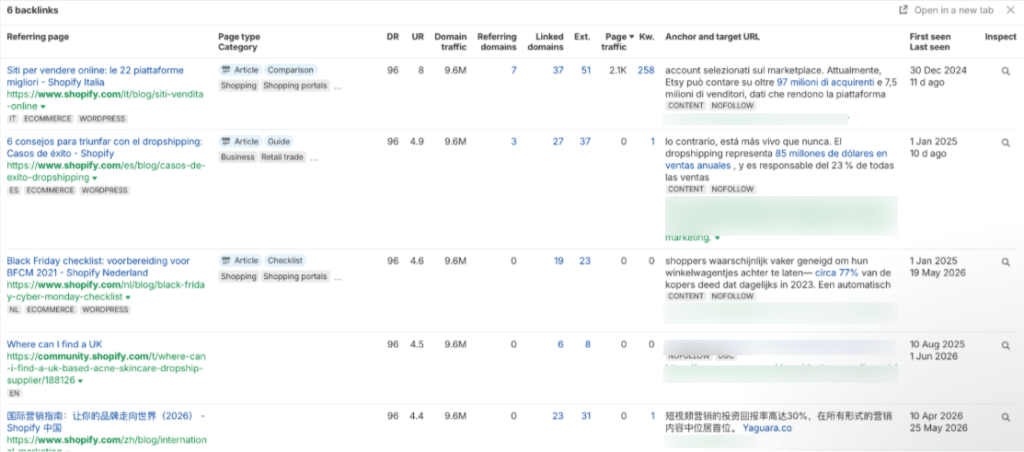
In this campaign, we secured links from ecommerce-focused publications and communities, including Shopify blogs (got 6 links from it) and related platforms. These pages were already publishing content around ecommerce, online selling, and dropshipping, making them contextually relevant to the target website.
To verify their process, ask the agency, “How do they evaluate publishers?”
A strong answer sounds like “We need real organic traffic with at least around 1,000 monthly visits, scaled up with DR. We won’t consider a site with DR 60 having only a few hundred visits. The site has to match your niche, and we reject any site that links out ten or more times per post to unrelated niches.”
A weak answer sounds like “We only use high-quality, high-authority sites” or “Everything is DR40+.” DR alone is not a quality standard, as it is the easiest metric to fake.
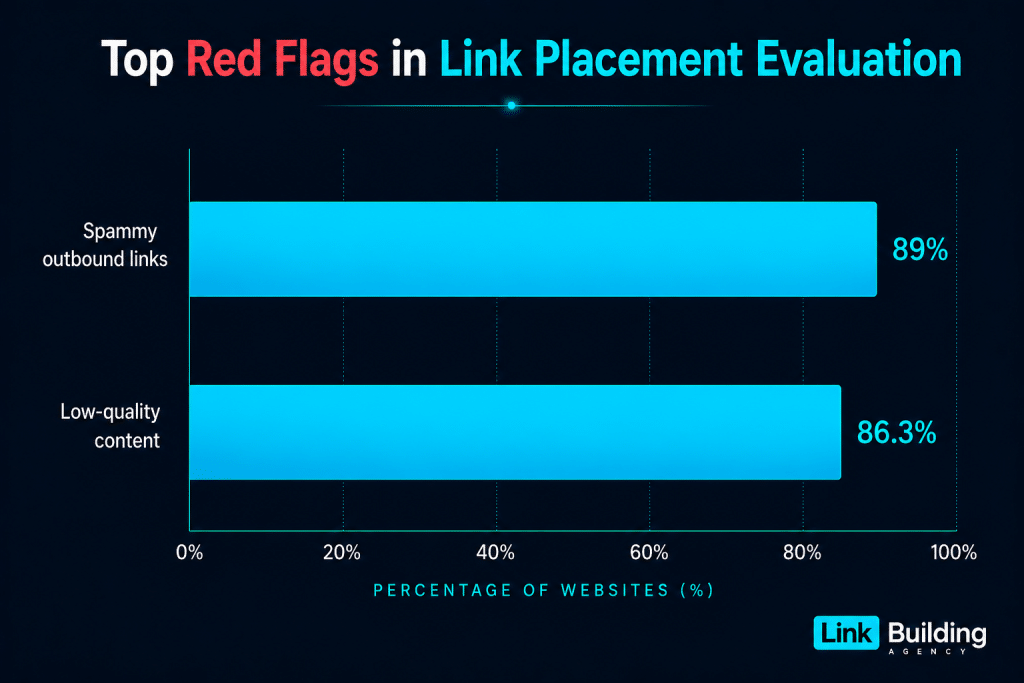
Of these checks, the outbound links matter the most. 89% of SEO professionals name spammy outbound links as their top red flag when evaluating a site.
3. Reporting Beyond Domain Rating and Vanity Metrics
A monthly report that only shows DR increases is not a real report. It is a distraction.
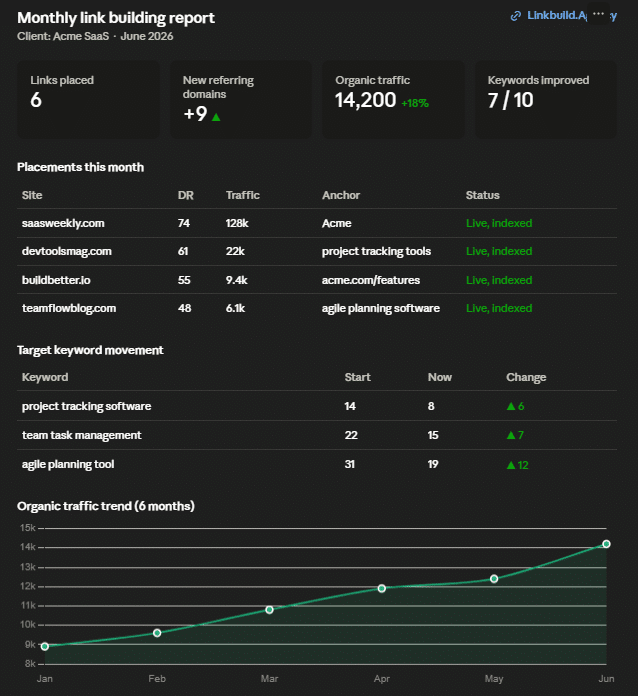
Meaningful reporting should include referring domain growth, organic traffic trends, keyword ranking movement for target terms, and whether that traffic is converting.
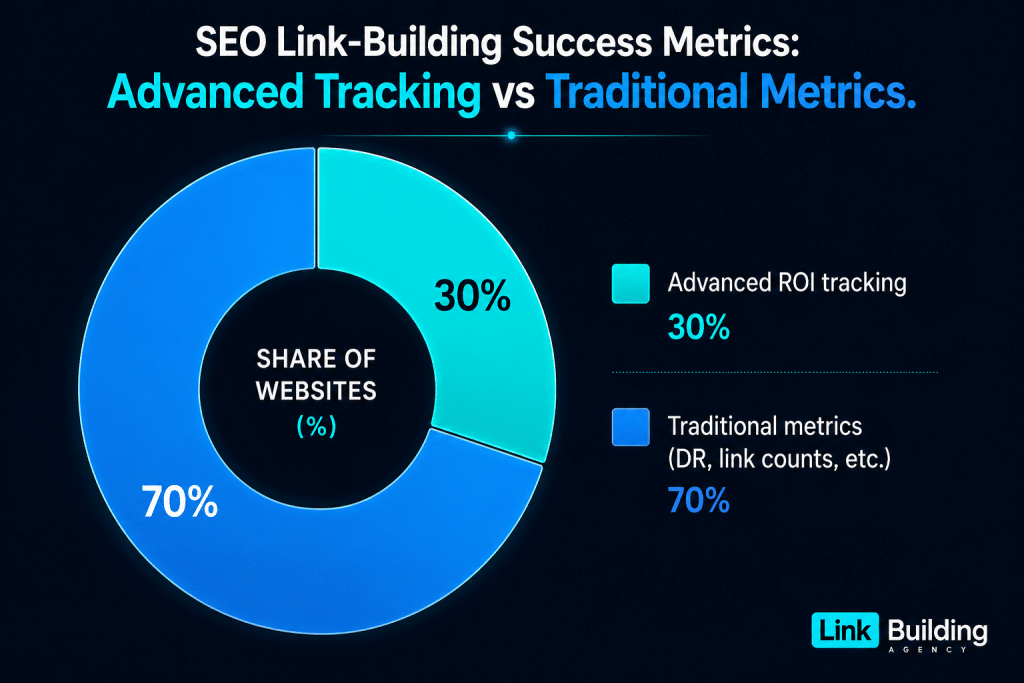
Only 30% of SEOs use advanced ROI tracking for links. The other 70% rely on DR, and link counts are considered success metrics. A good agency should be in the minority.
To verify, ask the agency for a sample client report. If it only shows DR and link counts, that tells you everything you need to know.
Here is what a report that tracks real results looks like. This is the format we use at LinkBuild.Agency.
4. AI Search Visibility and LLM Citation Potential
This is the criterion most agencies ignore, and it is increasingly important. AI Overviews now appear in 13.14% of all Google searches, and the numbers are rising continuously.
Research from Ahrefs shows that LLMs are most likely to cite original research, proprietary data, free tools, glossaries, step-by-step guides, and authoritative educational content.
To verify, ask whether the agency considers AI Overview and LLM citation potential when selecting publishers. Check if they are telling the truth in 3 ways:
- Ask them to show one page that has already been cited: A real agency can name a client page that now appears in an AI Overview or gets pulled by ChatGPT or Claude.
Tip: You can test it yourself by running the query in Google and seeing if AI Overview lists that page.
- Ask what they do to earn citations: LLMs mostly cite original research, proprietary data, free tools, and step-by-step guides. A real answer ties their content plan to those formats.
- Ask how they track it: Agencies doing real AI work use Ahrefs Brand Radar and Semrush’s AI Visibility Toolkit to measure how often a brand gets cited across AI platforms.
5. Proven Track Record in Your Industry
Generic case studies from unrelated industries are worthless. A SaaS company’s link-building strategy looks nothing like an e-Commerce or healthcare strategy.
Ask for at least two case studies from your specific sector. Look out for the starting referring domain count, the ending count, the timeline, the traffic impact, and the ranking movement on target keywords.
Here is one of ours: The same eCommerce client we referenced earlier came to us looking to improve their authority through quality link placements. Instead of focusing only on DR, we targeted relevant editorial opportunities in trusted publications with real audiences.
During the campaign, we secured placements from high-authority sites, including Forbes, with DR 90+ and millions of monthly visitors. These links were placed within relevant articles connected to the client’s industry, helping strengthen their backlink profile with relevant and trusted mentions.
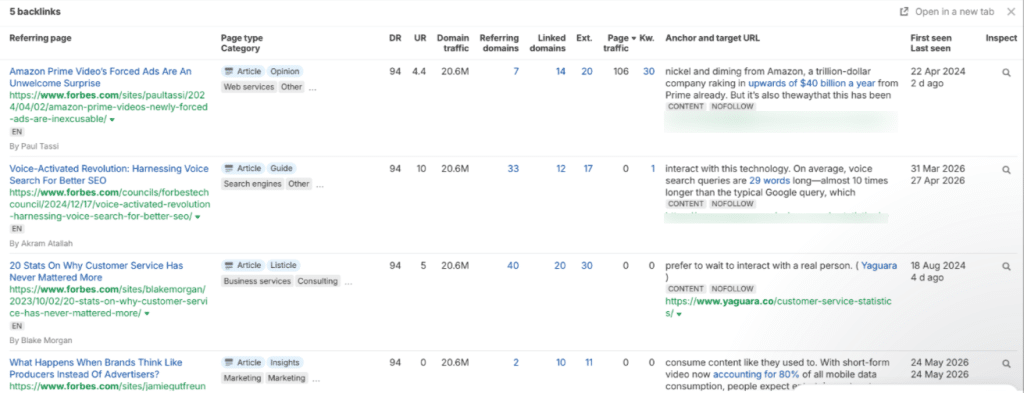
This is the approach we recommend when evaluating an agency: look for proven experience in your industry, not just generic case studies or impressive-looking metrics.
6. Pricing Structure and Deliverables
Most quality link-building retainers cost between $3,000 and $15,000 per month in 2026, with most agencies requiring a minimum of a 3-month commitment.
Focus on the cost per link, not the monthly retainer. For example, if you pay $6,000 for 10 links, that’s $600 per link, which is a reasonable price for quality editorial placements. If the cost is under $100 per link, the links are likely coming from low-quality or spammy sites.
To verify, ask the agency what is included in the monthly fee. If the answer includes vague deliverables like ‘up to 10 links per month’ without details on quality or placement type, it is not clear enough.
7. Communication, Strategy, and Account Management
A great strategy that is poorly communicated will eventually fail. The agency you evaluated during the sales process is rarely the team that will manage your account daily.
Ask who your actual account manager will be and request to meet them before signing. Understand how often you will receive updates, how strategy changes are communicated, and what the escalation path is if the results miss targets.
A good agency has a defined process for this. Vague promises of ‘regular check-ins’ are not a process.
8. Risk Management and Ethical Boundaries
This might be the most important criterion on the list. What an agency refuses to do tells you more about their quality than what they offer.
Any reputable agency should be able to immediately name PBNs, link farms, sitewide footer links, and sponsored content published without disclosure as things they will not do.
If the answer isn’t clear or they need time to think about it, that is not reassurance. That is a risk profile.
And if you ask us about PBNs, link farms, sitewide footer links, or undisclosed sponsored posts, the answer will always be a clear ‘no’. We do not use them, and neither should any reputable agency.
12 Questions to Ask Before Hiring a Link Building Agency
We have listed some questions that separate real partners from the rest. Include them in your initial call. The answers, and not just the questions, are what matter.
| No. | Question | Answer to look for | Answer to avoid |
| 1 | How do you acquire links? | Step-wise process described for editorial outreach, digital PR, original data, & niche edits | ‘Proprietary network’ or ‘Organic outreach’ without any specifics |
| 2 | Can I see 3 recent live placements? | Real URLs are shared immediately along with context | Samples from months ago or links to sites with no real traffic |
| 3 | What are your minimum site quality standards? | Need for real organic traffic, topical relevance | ‘We only place on DR40+ sites. DR alone is not a quality standard. |
| 4 | Do you use PBNs or paid link networks? | Clear ‘no’ with explanation of why and what they do instead | Deflection or any form of justification like ‘it depends on the situation’ |
| 5 | What does my monthly report include? | Shows a sample report which includes placement URLs, traffic data, ranking movement, and referring domain trend | Report screenshot showing only DR increase and link counts |
| 6 | Who manages my report day-to-day? | Arrange a meeting with the named person who is going to handle your site | ‘Our team’ or no specific person identified before signing |
| 7 | What happens to my links if I cancel? | Links are editorial and permanent. No removal of placements post-cancellation | No clear answer or links that may be removed on contract cancellation. |
| 8 | Can you share a case study from my industry? | At least one case study with before/after traffic and ranking data with a timeline | Generic case studies or ‘we have done similar work’ without specifics |
| 9 | How do you handle a link that goes dead? | Defined replacement policy. Time frame stated and process explained in detail | ‘We monitor links’ without any replacement commitment |
| 10 | How are you adapting to AI search and LLM visibility? | Reference to targeting publications cited by AI systems, brand authority signals, and GEO considerations | Blank stare or ‘that is not really our focus’ |
| 11 | What is included in the monthly fee? | Breakdown of everything included: outreach, content creation, placements, reporting, and account management | Bundled pricing with no breakdown of what each element costs |
| 12 | What’s your process if the results underperform? | Review anchor distribution, site quality, and strategy each month. If a campaign underperforms after 90 days, then it is adjusted before month four. | No defined review process or ‘SEO takes time’ with no specifics |
Red Flags When Choosing a Link Building Agency
Some signals should end the conversation immediately, no matter how polished the pitch deck is.
“Guaranteed #1 in 30 days” or Fast Results Promises
In 2026, a quality backlink takes 6-10 weeks on average to impact your rankings. That’s after it is placed, crawled, indexed, and evaluated by Google’s quality filters.
Below I have provided an example of ‘guaranteed rankings’ found on a live agency site. This is the kind of promise you should walk away from.
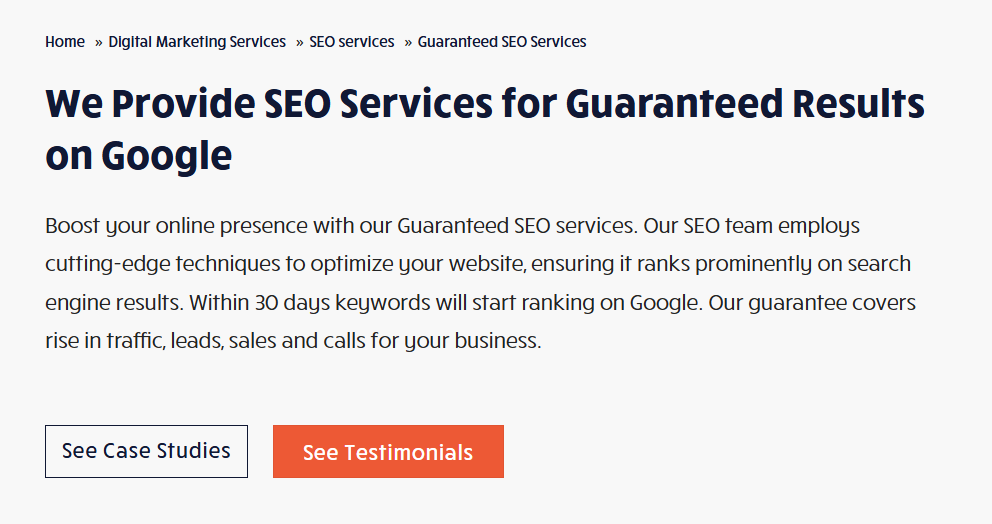
Campaigns promising faster than this are either selling you inflated DR from link farms or making promises they cannot keep. If they mention guaranteed rankings, positions, or traffic within unrealistic timelines, stop the process.
1,000+ Links a Month or Extremely Cheap per-link pricing
The average guest post link costs $365-$930 on quality sites before agency markup. An agency selling 50 links for $500 per month is not selling the links you want.
High volume at low price almost always means PBNs or hacked site insertions. These links may temporarily inflate DR, but do not improve rankings and carry penalty risk.
No Transparency on Sites or Acquisition Methods
A refusal to share live placement examples before you sign is not protecting intellectual property. It suggests a lack of transparency.
Ahrefs data shows that 66.5% of the links built since 2013 are now dead. If an agency is unwilling to show recent live links, there is no evidence that its current placements are any different.
Reporting or Pitch-Based Only on Domain Rating or Similar Metrics
DR and DA are third-party metrics, and Google does not use them. A report built entirely around the DR changes is a proxy metric, not actual SEO performance.
The same red flag shows up before you even sign when an agency’s pitch sells on DR alone. Below is a sample of such a pitch that sells on DR alone, promising to boost your authority from DR 60-94.
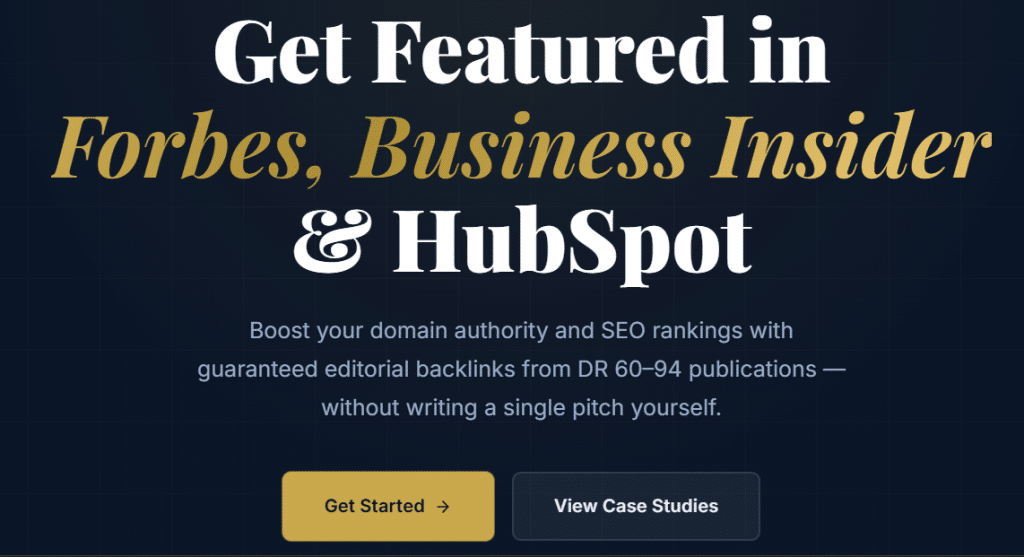
Real results show up in organic traffic, keyword rankings, and referral visits from placed links. If the agency cannot connect its work to these outcomes, it cannot demonstrate ROI.
No Clear Ethical Policy or Tactics Disclosure
Any agency worth hiring should clearly explain what tactics they do not use. If they avoid giving a direct answer, they may be relying on practices such as PBNs, link farms, hacked site placement, and sponsored content without disclosure.
Google’s SpamBrain AI is now sophisticated enough to identify manufactured links at scale. Websites with PBN-based backlink profiles can face penalties, and recovery may take months or even longer.
How Much Does a Link Building Agency Cost
Publisher placement fees have increased by 20 to 40% over the past two years as demand for high-quality editorial inventory has grown.
That is why cheap links are usually a warning sign. If quality placements cost more, an agency charging below market rates is likely taking shortcuts.
Here is the pricing reality that most agencies will not show you clearly.
| Price Range | What you are getting | Watch out for |
| Under $100/link | Link farms, PBNs, and low-traffic directories | Almost always harmful or worthless |
| $100-$300/link | Guest post on mid-tier blogs, variable quality | Check real traffic, not just DR |
| $300-$600/link | Editorial placements, real organic traffic | Quality sweet spot for most campaigns |
| $600-$1,500/link | High-authority editorial, DR 70-90 targets | Verify traffic and topical relevance |
| $1,500+/link | Top-tier press, major verticals | High risk, high reward |
| $3,000-$15,000/mo retainer | Managed campaigns, 8-24 links/mo depending on the niche | Confirm per link equivalent and minimums |
Your 30-day Agency Evaluation Process: Step-by-Step
Do not sign a 6-month retainer based on a single sales call. Run this process instead.
Week 1: Shortlist and Background Audit
First, shortlist 5–8 agencies in your niche by checking real case studies and proven results. Verify credibility by analyzing their backlink profiles in Ahrefs to assess link-building quality.
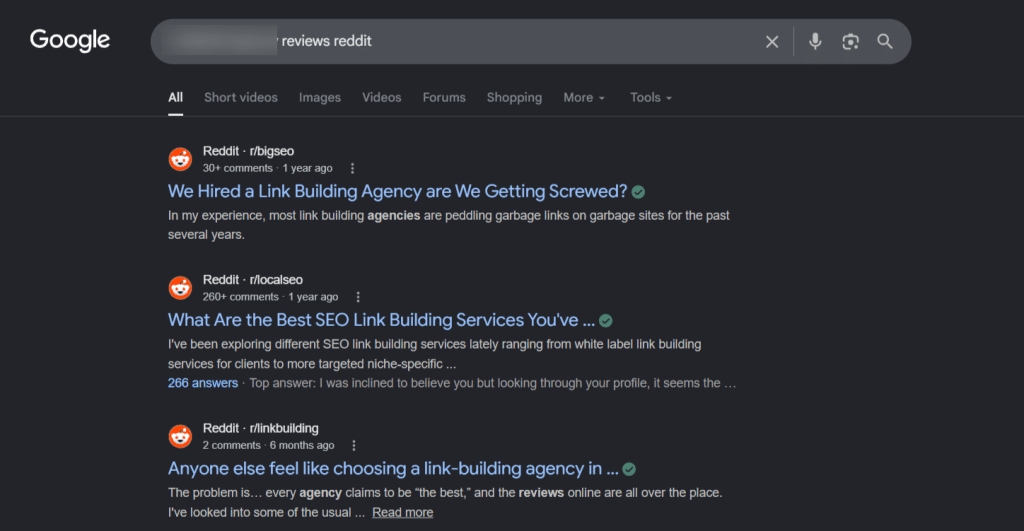
Next, research each agency using “[Agency name] + reviews/complaints” on Reddit and review platforms to identify patterns. Send a 12-question evaluation list before any call to filter serious, transparent partners.
Week 2: Communication and Transparency Testing
Review written responses and score each against the red flags guide. Only schedule calls with agencies that successfully pass the initial written screening process stage.
On the call, request a meeting with the account manager who will run the account. Ask for three live link samples and run each site through the four Ahrefs checks from criterion #1: organic traffic against DR, the 12-month traffic trend, where the traffic comes from, and the editorial standards. Reject any sample that fails the traffic vs DR check.
Week 3: Sample Strategy and Link Review
Ask the agency for a brief sample strategy tailored to your site, covering target publishers, anchor text approach, and content angles. This shows whether they understand a real SEO strategy or rely on generic templates.
Then assess their plan against these 4 simple checks:
- Named publishers, not categories: A real plan lists actual sites in your niche it plans to target.
- Your actual competitors: It should point to specific domains that link to your competitors but not you, and explain how it will close that gap.
- Anchor text strategy: A good plan explains the expected mix: mostly branded and URL-based anchors, with exact-match anchors kept low (under 20%).
- Content ideas: The suggested ideas should support your actual target pages and keywords.
Tip: After the agency submits the plan, swap your company name out of the plan. If it still fits any other client, then it is a template.
Week 4: Pilot Campaign and Performance Evaluation
Agree to a short paid pilot of one to two months with a clearly defined scope of two to five links. Lock deliverables in writing so expectations, quality standards, and reporting are unambiguous.
Evaluate performance based on link quality, which you can perform using the 5 points below:
- The site is real: It passes the four Ahrefs checks from criterion #1: organic traffic that matches the DR, a stable traffic trend, real traffic from the targeted audience, and a clean outbound link profile.
- It is relevant: the link is present on a page about your topic, on a site in your niche, and not on an unrelated post.
- The placement is editorial: Your link is inside the body content and not in a footer or author bio.
- The anchor text is natural: Branded or plain URL, not a stuffed exact-match keyword.
- It is indexed and live: Check if the page is indexed in Google Console or not.
You can skip the 4-week evaluation process and start with a small paid test with us. Evaluate the links against the same checklist and scale only if we deliver the results.
Pick The Right Link Building Agency
By now, you know what to look for before choosing a link-building agency in 2026. Look for real editorial links on sites with actual traffic, proven white-hat strategies, and reports that show meaningful results instead of just a DR number.
At LinkBuild.Agency, we follow these principles by carefully selecting publishers, focusing on quality over quantity, and providing clear reports on campaign performance.
If you want a link-building strategy built around your goals, book a free call, and we will create a plan around your site.
FAQs
How much does a link-building agency cost in 2026?
Quality retainers run $3,000 to $15,000 a month. Per link, expect $300 to $600 for solid editorial placements and $1,500+ for top-tier press. Anything under $100: a link is almost always a PBN or link farm.
How long until I see results from a link-building campaign?
In 2026, the average time for a high-quality backlink to impact rankings is 6–10 weeks. Meaningful traffic and ranking movement typically show between months 4 and 6. Budget for a 6-month minimum before judging ROI.
Agency vs In-house: Which one is better for link-building?
It depends on volume and relationships. In-house makes sense if you have 15+ hours per week and an existing publisher network. If you need more than 5 quality placements per month, most in-house teams can’t sustain that.
How do I know if links from an agency are safe?`
Pull every placed link in Ahrefs immediately after placement. Check that the linking page has real organic traffic. Confirm the site doesn’t appear in known PBN lists. Ask your agency for a link replacement guarantee in the contract. Run your disavow file quarterly to catch anything that slips through.
Should I hire an agency if I’m a small business or startup?
Only if the technical SEO foundation is solid and you have linkable content. Start with a small pilot budget ($1,500–$3,000) to test quality before committing to a full retainer. Consider a niche freelancer or marketplace first if the budget is under $2,000/month.