Here is the uncomfortable truth: link-building is one of the easiest services to fake. Clients pay for deliverables they cannot easily verify, in a channel designed to hide what is actually happening.
67.2% of link builders cite lack of topical relevance as a major red flag when evaluating link opportunities.
Despite this, many agencies continue to prioritize metrics like DR and DA over relevance, traffic quality, and editorial standards. As a result, businesses often spend significant budgets on links that provide little SEO value and may even create long-term risks.
This guide is designed to fill that gap and help you identify red flags in link-building services.
Key Link Building Statistics for 2026
- 73.2% of marketers believe backlinks influence AI search visibility in ChatGPT and other LLMs. (Source: Editorial.link)
- Top 5% of outreach teams get 40% reply rates; the median is just 12%. (Source: BuzzStream)
- Only 7.6% of guest post opportunities qualify as genuinely high-quality placements. (Source: BuzzStream)
- 78.1% of experts reported positive ROI from link-building. (Source: LBHQ)
- Brand mention frequency correlates 3x more strongly with AI citation rates than backlinks. (Source: Ahrefs)
Top 12 Link Building Service Red Flags
This section covers some of the most commonly used link-building service red flags.
1. The Biggest Red Flag: Guaranteed Rankings or “DA Metrics” Sales Pitches
If an agency opens with “we guarantee page one rankings,” close the tab. No one can control Google’s algorithm.
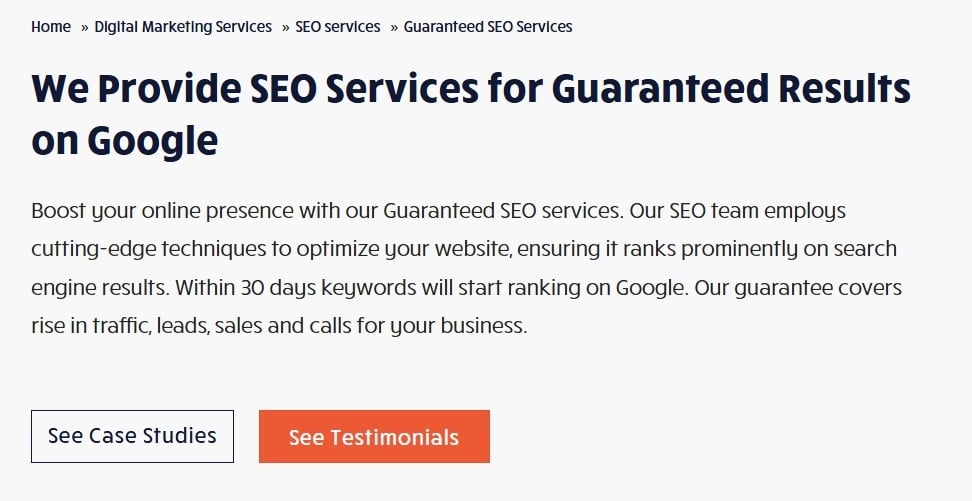
Rankings are influenced by hundreds of factors like content quality, site architecture, and backlinks. A legitimate provider can deliver links, but they cannot deliver rankings.
A provider can control the number of placements, the relevance of content, and anchor text diversity. They cannot control when and how Google responds.
The DA/DR pitch is equally misleading. Domain Authority is a Moz metric, and Domain Rating is an Ahrefs metric. Neither of them is used by Google. 65% of marketers say DA or DR is the most important metric for backlink quality.
This number tells that the industry has trained buyers to value a third-party proxy for quality that Google itself ignores. And the agencies exploit this.
In order to stay safe from this red flag, ask agencies: “What do you measure besides DR?” If they can’t talk about real traffic, topic relevance, and search ranking improvements, then that’s a warning sign.
2. If They Won’t Show Real Examples of Links, Walk Away
Any reputable link-building agency should be comfortable showing you samples of their work. This does not mean sharing client names or revealing their full strategy. It means showing you published placements that reflect their editorial standards.
If an agency responds to this request with “we protect client confidentiality” or shows you a spreadsheet of domains without live URLs, that is a problem.
Real editorial placements are public by definition. They already exist on the web. There is no confidentiality issue in linking to them.
What you are looking for is evidence that the links are live on real, editorially relevant pages, and not sponsored post pages, not sidebar link blocks at the bottom of unrelated articles.
The absence of samples is one of the strongest predictors of low-quality work. A provider who has built strong links is usually proud to show them. One who has not will find a reason to avoid the question.
3. Private Blog Networks (PBNs) Disguised as “Premium Outreach.”
PBNs are networks of websites built or acquired specifically to pass link equity to a target site. They are a direct violation of Google’s Search Essentials (formerly Webmaster Guidelines) and have been for over a decade.
The problem in 2026 is that modern PBNs are harder to detect. They use real-looking domains, AI-generated content, diverse hosting, and separate registrant data. They show DR metrics that look respectable.
The difference between a PBN and an editorial placement is intent. A PBN site exists to pass link equity, not to serve the readers. An editorial site links to resources because they add value to a real audience.
Google’s algorithms are specifically designed to detect the difference. And when they do, the consequences are severe.
The Intergrowth case study is instructive: a client lost 80% of their organic traffic after Google discovered the site was a part of a PBN, and the client had no idea their site was in a network. They had purchased it from the previous owner.
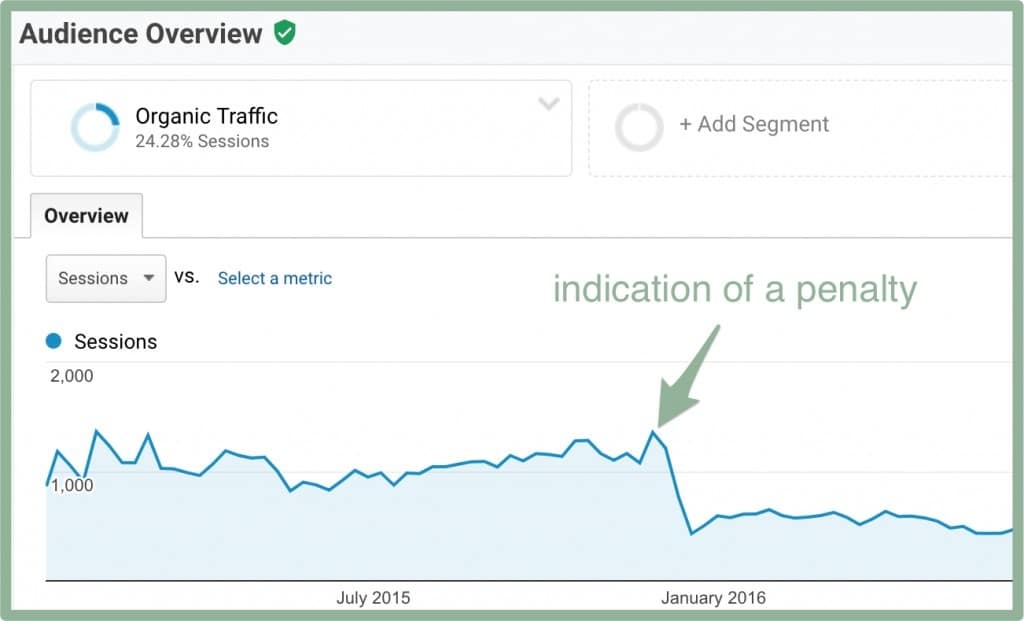
The point is, you can receive PBN links without knowingly buying them, which is why agency transparency matters.
4. Why “We Have 500+ Websites” Is Often a Link Farm Red Flag
Real editorial outreach cannot guarantee placement at scale or on a specific site. You can only pitch them. Sometimes they get published, and sometimes they don’t.
When an agency tells you they have a private publisher network of 500+ sites and can guarantee placements in any of them, focus on the word ‘network.’
Legitimate publishers run editorial calendars, have standards, and reject most pitches. A ‘network’ that guarantees placements is not a set of editorial relationships; it is a link farm.
Only 7.6% of guest post opportunities meet genuine quality standards. If an agency promises 50 backlinks every month from only 50 websites, the numbers don’t add up unless they’re using paid, low-quality sites.
5. Cheap Link Building Packages Are Cheap for a Reason
Quality link-building is expensive. This is because manual outreach takes time, quality content costs money, and relationship placements do not scale on a $99/month budget.
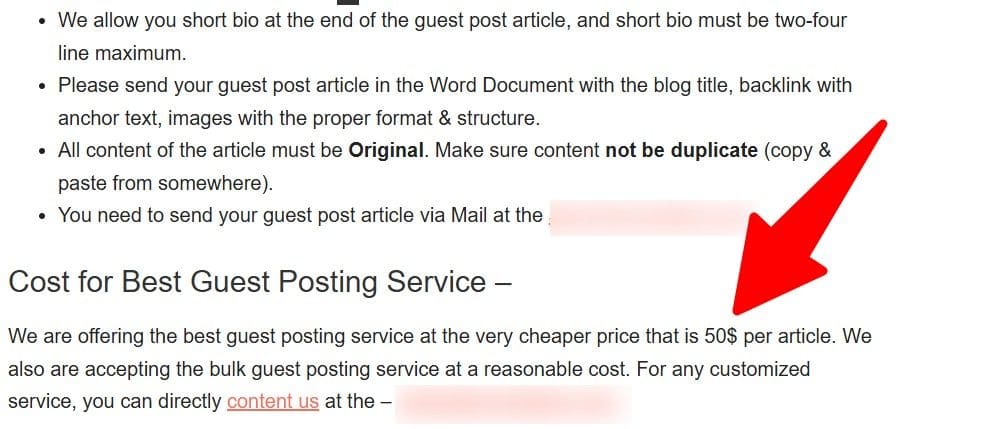
On average, a guest post link costs $365, with high-quality posts averaging $930 based on traffic and authority benchmarks. Digital PR links run $1,250 to $1,500 per link and are described as the most valuable for authority and rankings.
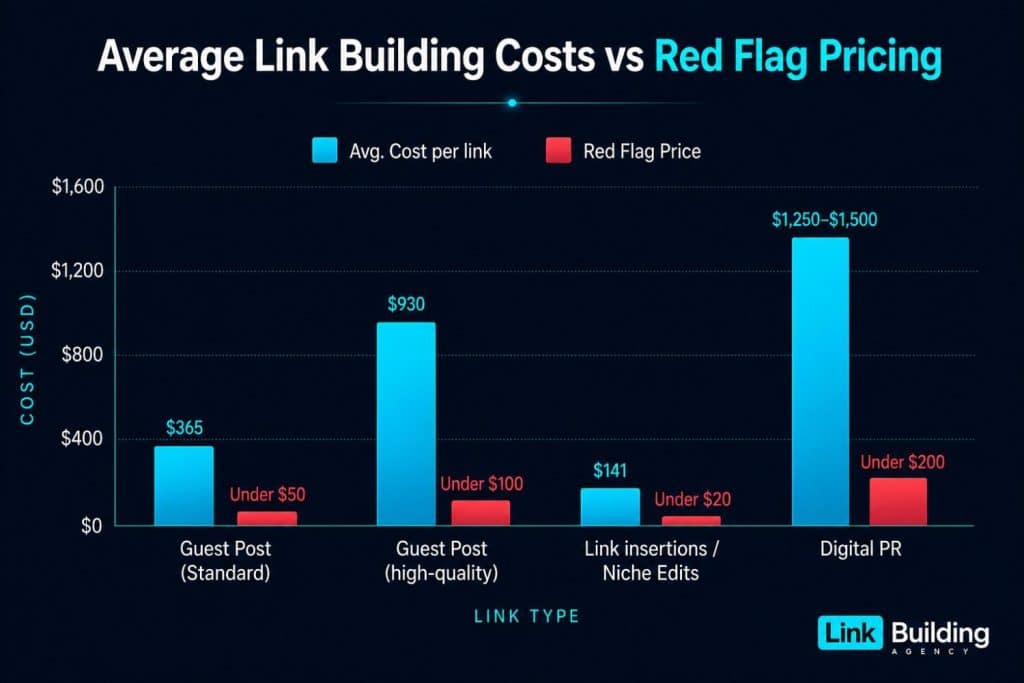
| Link Type | Avg. Cost per link | Red Flag Price |
|---|---|---|
| Guest Post (Standard) | $365 | Under $50 |
| Guest Post (high-quality) | $930 | Under $100 |
| Link insertions / Niche Edits | $141 | Under $20 |
| Digital PR | $1,250–$1,500 | Under $200 |
80.9% of link-building professionals expect the costs to get even more expensive over the next 2-3 years.
If an agency is selling very cheap backlinks, those links are probably useless now or will become useless soon.
6. Overuse of Exact-Match Anchor Text Is a Major Warning Sign
Anchor text is the clickable text used in the hyperlink. When an agency uses the target keyword as the anchor text every single time, it looks unnatural to Google.
Real editorial links use varied anchor text. Sometimes, the brand name, URL, a contextual phrase, and a few exact matches. This pattern is organic because natural links do not follow a pattern and reflect genuine linking behavior.
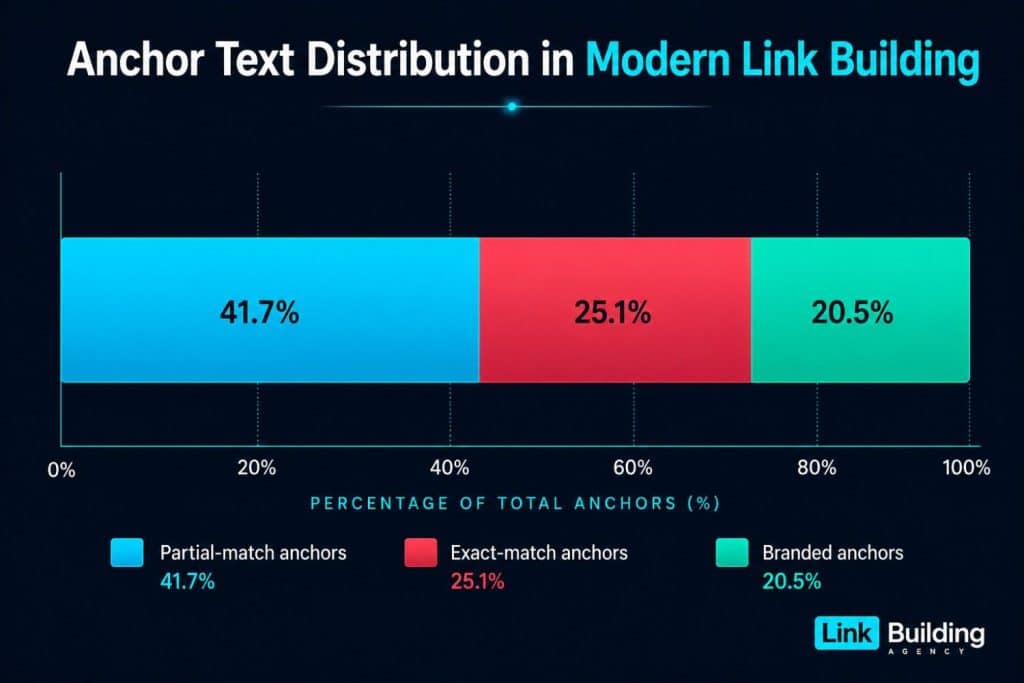
Real agencies deliberately diversify anchor profiles. Partial match anchor texts are the top choice of 41.7% of the experienced link builders. Exact matches follow with 25.1% and branded anchors at 20.5%.
A good agency will show you an anchor text distribution plan before they build a single link. If they have not thought about this, they are building profiles that could get you penalized, even with real links.
7. No Discussion About Relevance, Traffic, or Audience Fit
A link from a relevant, trafficked page in your niche is worth more than a link from a high DR site with zero organic visitors and no topical connection to your business.
67.2% of link builders cite lack of topical relevance as a red flag when evaluating link-building opportunities.
The most important factor in link relevance is the topic of the page where the link is placed (62%).
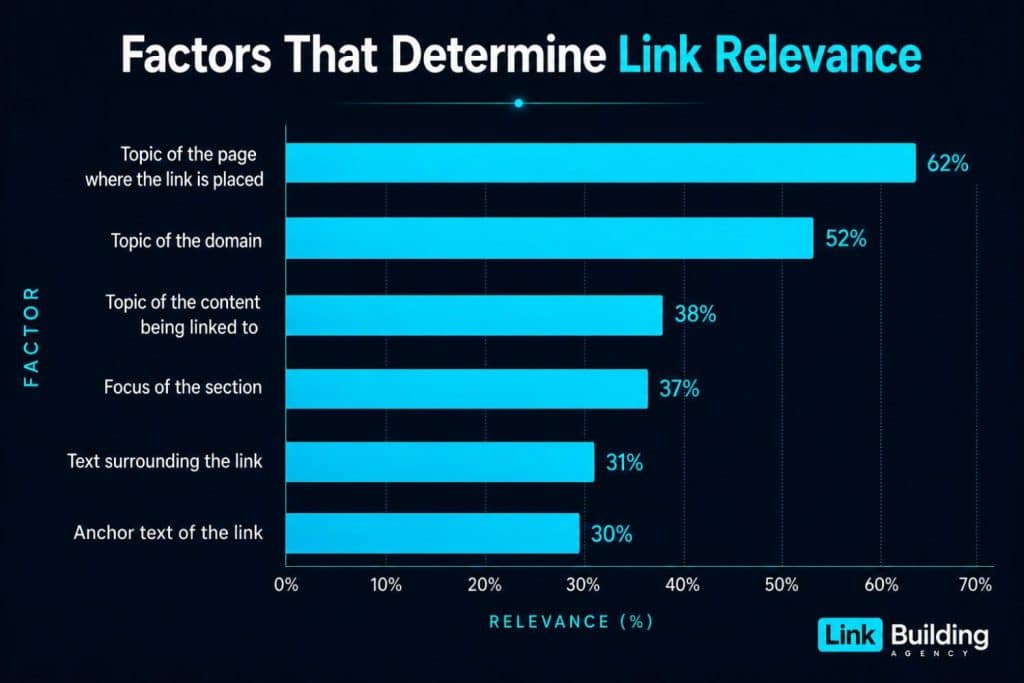
| Factor | Relevance |
|---|---|
| Topic of the page where the link is placed | 62% |
| Topic of the domain | 52% |
| Topic of the content being linked to | 38% |
| Focus of the section | 37% |
| Text surrounding the link | 31% |
| Anchor text of the link | 30% |
Topical alignment is not optional; it is the primary filter that determines whether a link reinforces or dilutes your authority.
Traffic quality matters just as much. A site with DR 60+ but under 500 monthly visitors is almost always a penalized link farm. Yet many agencies never pull traffic data. They sell high DR metrics because they are easy to use to impress clients.
8. Agencies That Avoid Talking About Their Outreach Process
A legitimate link-building agency should be able to walk you through their process clearly: how they find prospects, how they qualify them, what a typical pitch looks like, and how long it takes from outreach to placement.
If the agency avoids these questions or gives vague or suspicious answers, it should be treated as a strong warning sign.
The difference between manual outreach and bulk link placement systems is huge. Manual outreach means a real person researches a site, writes a tailored pitch, and follows up. Bulk outreach systems send hundreds of identical pitches that are cheap to run and produce cheap results.
BuzzStream’s analysis of outreach campaigns found a median reply rate of just 12%, while the top 5% of outreach teams consistently achieve 40%+ reply rates.
Poorly personalized outreach actually decreases reply rates by 1.3%, and groups using only templates average a 16% reply rate.
Real outreach agencies will tell you what their average reply rate is and how they track it. Most campaigns deliver results within 3 to 6 months, so an agency promising fast turnaround with no discussion of outreach mechanics is another warning sign.
9. The Most Dangerous Link Building Red Flags Are Usually the Quiet Ones
Not all red flags are loud. Some of the worst practices in the industry come packaged in professional reports and confident language.
- Suspiciously fast turnaround times:
Real editorial outreach does not produce 15 placements in a week. Pitches need to be written, sent, followed up on, accepted, and then content needs to be produced or approved.
Even with an efficient team, editorial timelines take weeks, not days. 57% of outreach replies arrive within 6 hours, but that is replies, not live placements.
- Vague Deliverables:
A proposal that promises ‘10–15 links per month’ without clearly explaining site quality standards, minimum traffic requirements, content relevance, or reporting methods is not a real strategy. It is simply a blank check.
A good agency clearly defines what counts as a successful placement before the work starts.
- No Education:
Experienced providers educate clients instead of hiding the process. If an agency responds to basic questions with vague jargon instead of clear explanations, that should raise concerns.
Professionals who truly understand their work are usually willing to explain it clearly. Agencies that rely heavily on vague jargon instead of clear answers should be approached with caution.
10. No Mention of AI Visibility or Brand Authority
Link building in 2026 is not just about traditional Google rankings, as search behavior has shifted. AI-powered search tools like ChatGPT, Perplexity, and Google’s AI Overview are pulling answers from sources they consider authoritative.
73.2% of marketers now believe backlinks influence the chance of appearing in AI search results. Ahrefs found that brand mentions (0.664) across authoritative sources were 3x more strongly correlated with visibility in Google AI Overviews than backlinks (0.218).
AI search traffic converts at 14.2% compared to Google organic search (2.8%), a 5.1x advantage. Yet, only 22% of marketers currently track AI visibility.
Brands in the top 25% for web mentions get 10x more AI visibility than others. The top 50 brands receive about 28.9% of all mentions in AI Overviews.
If your link-building strategy is not building toward this kind of branded presence, it is missing a significant part of the modern search landscape.
11. Reporting That Looks Impressive but Lacks Real Insight
A monthly PDF with a list of domain names, DR scores, and live URLs is an activity report, not a performance insight. The difference matters more than clients realize.
Activity reports tell you what was built. Performance insights tell you why it matters and what impact it had.
Good reporting connects link placements to:
- Organic traffic trends
- Keyword movement on target pages
- Referral traffic from specific placements
Moreover, it contextualizes the work within your site’s broader trajectory of authority.
78.1% of SEO professionals report positive ROI from link-building efforts. But you cannot measure ROI without connecting placements to outcomes.
If your agency cannot show you the path from “link built” to “traffic moved”, they are not tracking the right thing.
12. Red Flags Hidden Inside Long-Term Contracts
A link-building contract that locks you in for 6 to 12 months with no performance clauses is structured to protect the agency, not the client. Understand exactly what you are signing before any retainer begins.
Low-quality agreements often lack performance accountability. A credible agency should be open to performance check-ins after 90 days, with clear and agreed-upon metrics for success.
Long-term contracts only benefit both parties when there is an established track record. For a new engagement with an unproven record, a 3-month trial is a reasonable ask.
Content ownership is another common trap. If an agency’s contract retains ownership of any guest post or editorial content they create on your behalf, the links from those pieces may disappear if you leave.
Confirm in writing that all the content produced for your campaign becomes your intellectual property or that placements remain live after termination.
Why So Many Businesses Get Burned by Link Building Services
Link building is difficult to evaluate from the outside. You cannot see the outreach process behind a backlink. You only see the final link, and by then, it is often impossible to know whether it was genuinely earned or simply bought.
This hidden process is what many bad link-building agencies take advantage of. They make cheap mass link-building look professional by calling it ‘editorial relationships.’ They send reports showing high domain ratings and use terms like ‘placements’ and ‘campaigns’ to sound impressive.
The problem is that most clients do not know what questions to ask to judge the actual quality of those links.
Real outreach takes time that includes a qualified prospect list, personalized pitches, follow-ups, content creation, and relationship management. None of that is scalable for $99/month.
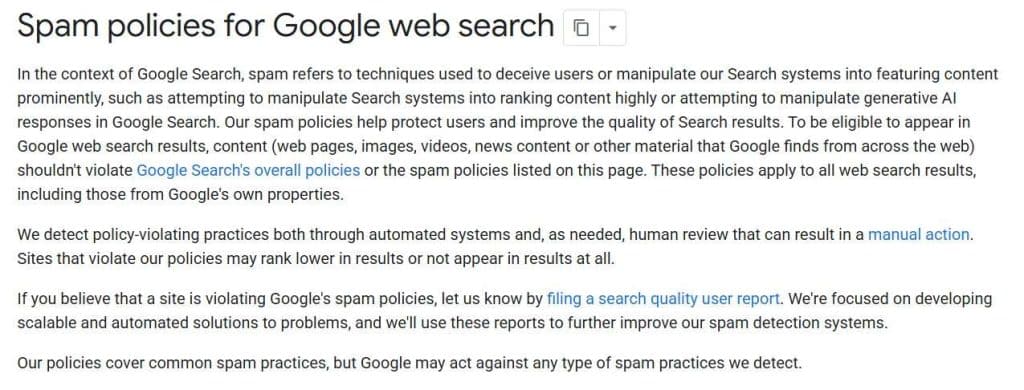
Because quality link-building is expensive, many agencies take shortcuts instead. They rely on PBNs, link farms, and spammy directories while marketing it as “premium outreach.” Google, however, often sees these tactics as manipulative and may penalize the site for it.
What Good Link Building Services Actually Do Differently
Knowing the red flags is half the job. Knowing what to look for in a legitimate service is the other half.
1. They are Relevance-first
Good agencies evaluate every prospective placement for topical relevance and actual organic traffic before outreach begins. They discard high-DR sites that have no audience fit.
72% of SEOs say links from niche-relevant sites are the most important factor for improving organic rankings. This clarifies that relevance is not just ethically correct; it is operationally efficient.
2. They have Editorial Standards
Credible providers reject sites that exist primarily to sell links, regardless of the metrics. They look for real content, real editorial calendars, and real audiences.
They know the difference between a site that has been penalized and a site that has earned its authority over time.
3. They Communicate Transparently
They clearly explain their outreach process, typical timelines, quality standards, and past results. They do not hide behind jargon.
Most legitimate campaigns take 3 to 6 months to show measurable results, and credible agencies state this upfront instead of overpromising.
4. They Set Realistic Expectations
Real link-building is slow, expensive, and non-linear. The agencies worth hiring will tell you that the first 90 days are largely prospecting, relationship-building, and content placement.
89.2% of link builders observe the effect of backlinks on rankings within 1 to 6 months, not days.
5. They Think about Brand Authority
The best agencies in 2026 understand that digital PR, expert positioning, and brand mentions are part of the same strategy as link-building. They focus on building topical authority and AI visibility, not just increasing the number of backlinks.
They track metrics like organic traffic growth, referral traffic, keyword movement, and AI citations that matter the most.
Conclusion: Choose Long-Term Authority Over Short-Term Shortcuts
Sustainable link-building is slower and more expensive than shortcuts, but it compounds over time. A link placed on a genuine editorial site with real traffic is a long-term asset that can continue to drive referral traffic and strengthen authority for years.
In contrast, a PBN link or bulk placement is a short-term tactic that can become a liability once detected.
FAQs
Most legitimate link-building campaigns take between 3 and 6 months to show measurable improvements in rankings, traffic, or authority. Faster promises are often a warning sign that shortcuts, low-quality placements, or manipulative tactics are being used.
No. High DR or DA alone does not guarantee quality. A strong backlink should come from a relevant website with real organic traffic, an engaged audience, and editorial standards that align with your industry and goals.
Look for guaranteed placements, repeated use of the same websites, weak content quality, low organic traffic, and vague explanations about publisher relationships. Reputable agencies are transparent about how links are earned through genuine outreach.
Quality link-building requires outreach, content creation, and relationship building, which makes it resource-intensive. Extremely cheap packages often rely on link farms, PBNs, or low-value placements that provide little benefit and may create future risks.
Google evaluates context, not just authority scores. A backlink from a relevant industry website with an interested audience typically provides stronger ranking signals and better referral traffic than an unrelated site with higher metrics.
No. Modern link-building should also strengthen brand authority, increase visibility across AI-powered search platforms, and generate brand mentions. These signals contribute to broader online credibility and can support long-term organic growth.