Cold emails still rule the roost, accounting for 45.1% of the link builders who rely on them as their prime strategy. In terms of 2026, the open rate varies between 27.7% and 44%, and response rates are even more discouraging at 3.43%, compared to 8.5% seen in 2019.
Personalized subject lines can make one’s email open rate higher by 133%, while multi-channel marketing campaigns work better than single-channel strategies by 287%.
We have compiled a detailed statistical report on cold email, LinkedIn, cold calling, and link
building outreach, sourced from credible third-party research.
Key Cold Outreach Statistics 2026
- Email is the top outreach channel for 45.1% of link builders.
- Cold email open rates average 27.7%-44% in 2026.
- Cold email response rates fell to 3.43% in 2026.
- Personalized subject lines boost reply rates by 133%.
- One follow-up email increases replies by 65.8%.
- Multi-channel outreach drives 287% higher performance than single-channel.
Cold Email Statistics
Cold email is the highest volume outreach channel for both sales and link building. 45.1% of link builders use email as their primary communication method for earning backlinks.
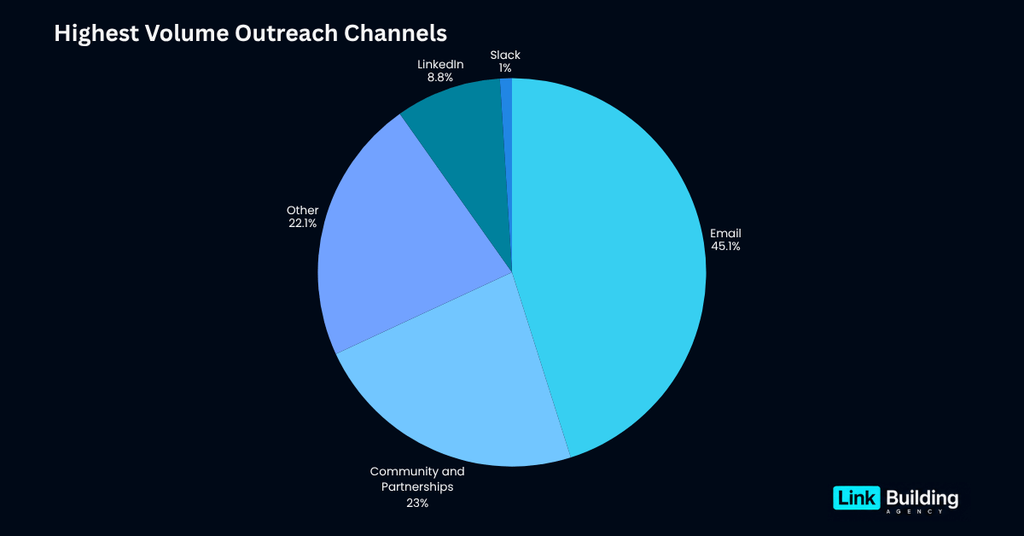
Here’s how email stands against other methods of earning backlinks:
| Rank | Source | Percentage |
|---|---|---|
| 1 | 45.10% | |
| 2 | Community and Partnerships | 23.00% |
| 3 | Other | 22.10% |
| 4 | 8.80% | |
| 5 | Slack | 1.00% |
Decision-makers receive over 100 sales emails per week. Google and Yahoo’s 2024-2025 email authentication requirements, including mandatory DMARC, DKIM, and SPF, have made it harder for poorly configured senders to reach the inbox at all.
What Is The Average Open Rate For Cold Emails?
The average cold email open rate in 2026 is between 27.7% & 44%, depending on the research methodology and whether Apple’s Mail Privacy Protection (MPP) is inflating the figures.
A “good” baseline is considered anything above 40%, with top-performing campaigns achieving open rates above 65%.
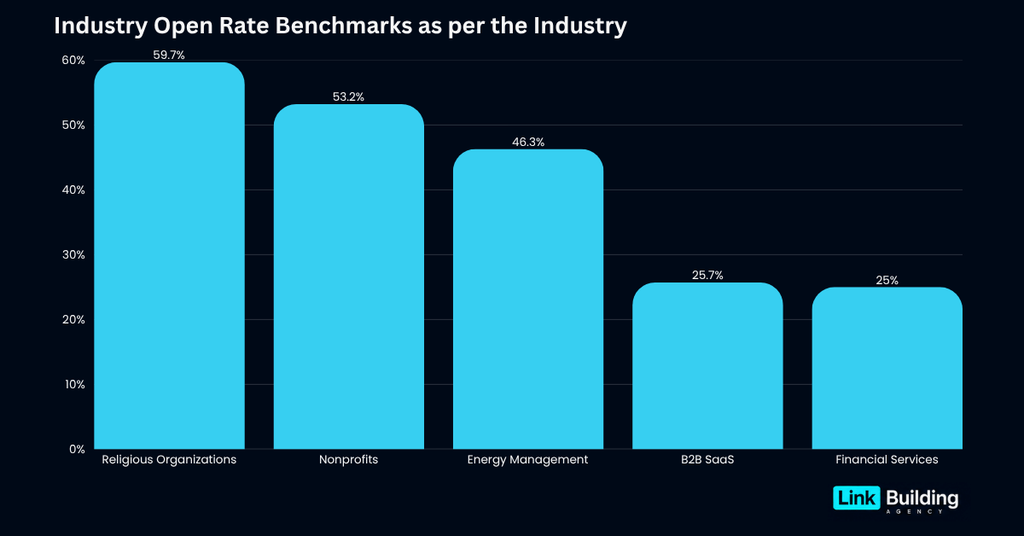
Below are the industry open rate benchmarks as per the industry:
| Industry | Average Open Rate |
|---|---|
| Religious Organizations | 59.70% |
| Nonprofits | 52.4-53.2% |
| Energy Management | 46.30% |
| B2B SaaS | 25.70% |
| Financial Services | 21.6-25% |
For well-configured campaigns with warmed sending domains, verified lists, and subject lines under 40 characters, open rates of 35-55% are achievable. Top-docile campaigns exceed 55% through researched first lines and a verified list refreshed within the first 30 days.
Software companies lead all industries with an average open rate of 47.1%. The financial services and insurance industries fall behind at 22% each.
| Industry | Open rate |
|---|---|
| Software | 47.10% |
| Education | 40.40% |
| Marketing & advertising | 35.70% |
| E-learning & edtech | 34.80% |
| IT security | 33.30% |
| Real estate | 32.60% |
| Construction | 32% |
| Leisure, travel & tourism | 31.60% |
| Hospitality | 29.30% |
| Legal service | 27.30% |
| Telecoms | 27.20% |
| IT services & IT consulting | 26.20% |
| E-commerce | 25.90% |
| Healthcare | 25.50% |
| Tobacco, cannabis & CBD | 25.40% |
| Transportation & logistics | 25.20% |
| Accounting | 23.80% |
| Financial services | 22.80% |
| Insurance | 22% |
Source: Vitamail, ColdMailOpenRate, Instantly, Growleads
Cold Email Subject Line Statistics
47% of people who receive emails make their decision to open the email solely based on its subject line. Subject lines represent the first and, in most cases, the only decision made by the recipients.
The optimal subject line has 2 to 4 words, with an opening rate of 46%. Subject lines that have one word and nine to ten words have low rates due to unclear subject lines and mobile visual issues.
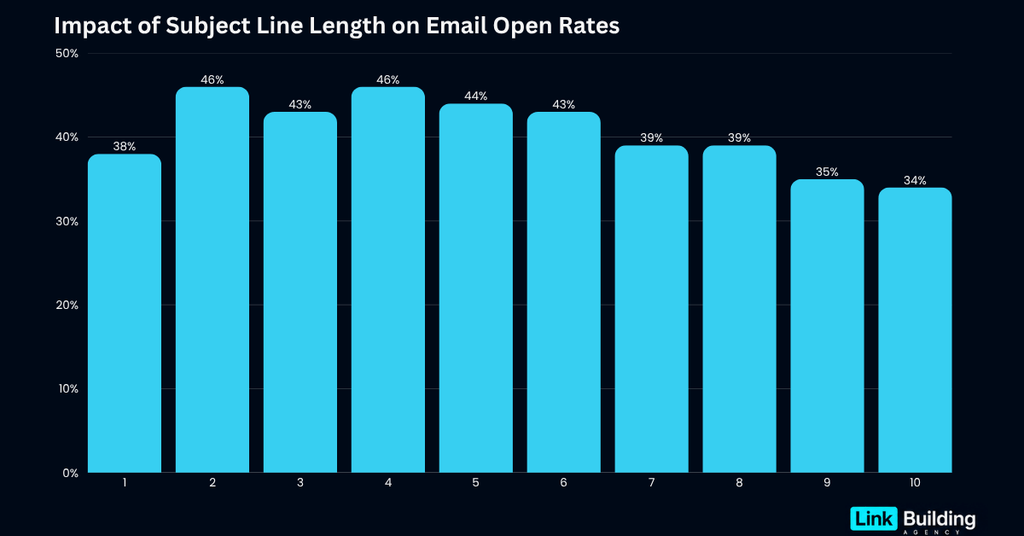
Here’s how the number of words in a subject line affects email open rates:
| Number of Words in Subject Line | Open Rate |
|---|---|
| 1 | 38% |
| 2 | 46% |
| 3 | 43% |
| 4 | 46% |
| 5 | 44% |
| 6 | 43% |
| 7 | 39% |
| 8 | 39% |
| 9 | 35% |
| 10 | 34% |
Subject lines phrased as questions hit a 46% open rate, outperforming most other formats.
The caveat: the question needs to be specific to their situation. Generic questions like “Struggling with X?” read as a template immediately.
Also, including a number in the subject line increases open rates by 45%.
Ex., “3 ways to improve outreach” performs better than “ways to improve outreach”.
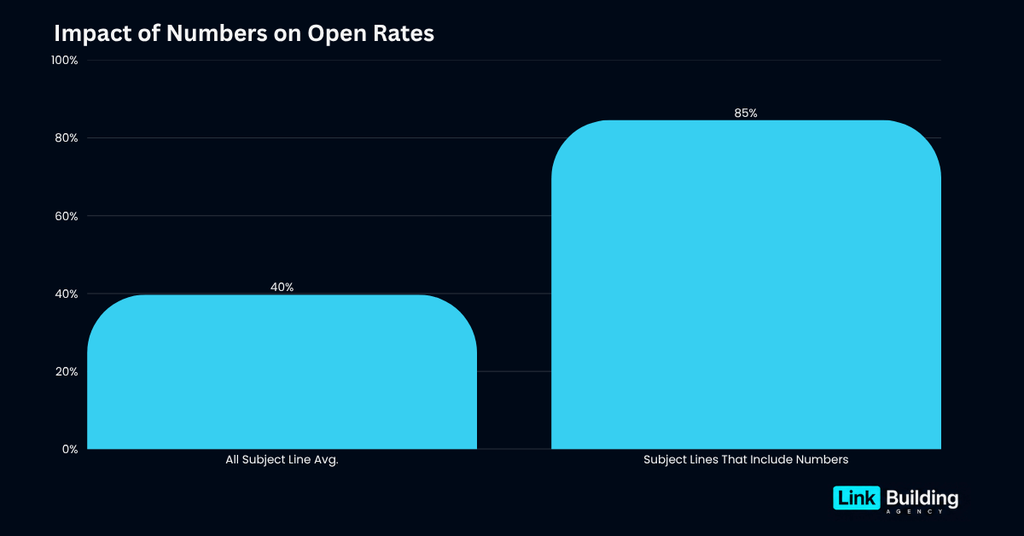
This is how having a number in your subject line can dramatically increase your email open rates:
| Subject Line Category | Open Rate |
|---|---|
| All Subject Line Avg. | 39.71% |
| Subject Lines That Include Numbers | 84.61% |
Terms steeped in urgency, like “ASAP,” and generic greetings like “Hello, friend,” drag open rates below 36%.
A/B testing subject lines consistently improves open rates by up to 20% over time. This encourages us to run at least one subject line test per campaign.
Source: Invesp, Belkins, Yesware, Apollo Technical
Cold Email Response Rate
The overall average cold email response rate in 2026 is 3.43%, based on Instantly’s benchmark report analyzing billions of sends. This is down from 8.5% in 2019, 7% in 2023, and 5% in 2025.
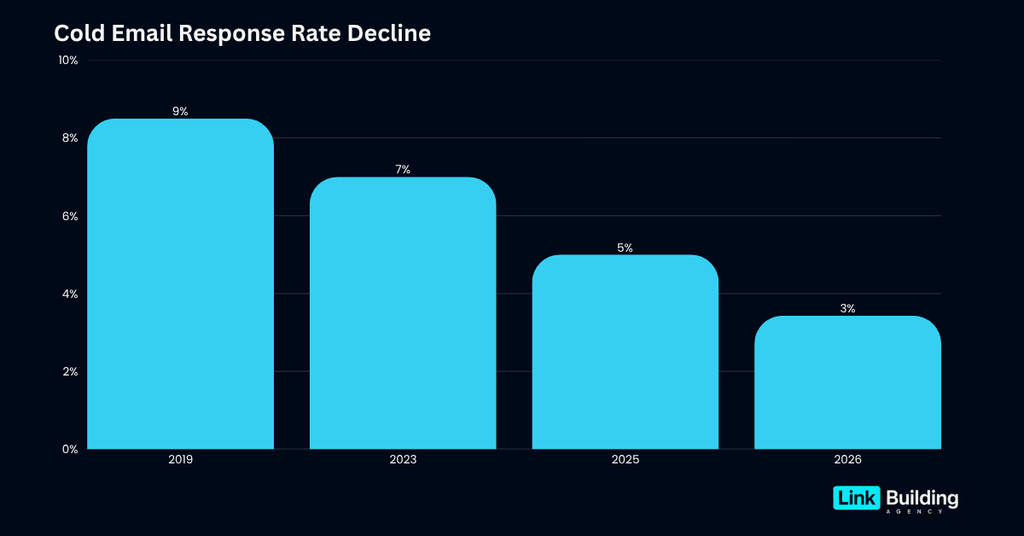
The decline is an indication of inbox saturation, AI-generated outreach flooding inboxes, and progressively stricter spam filtering.
| Year | Average Cold Email Response Rate |
|---|---|
| 2019 | 8.50% |
| 2023 | 7.00% |
| 2025 | 5.00% |
| 2026 | 3.43% |
Legal services lead all industries with up to a 10% reply rate. SaaS and software sit near the bottom with rates often below 2% due to inbox saturation. Technology and software companies typically see 3-4% average reply rates.
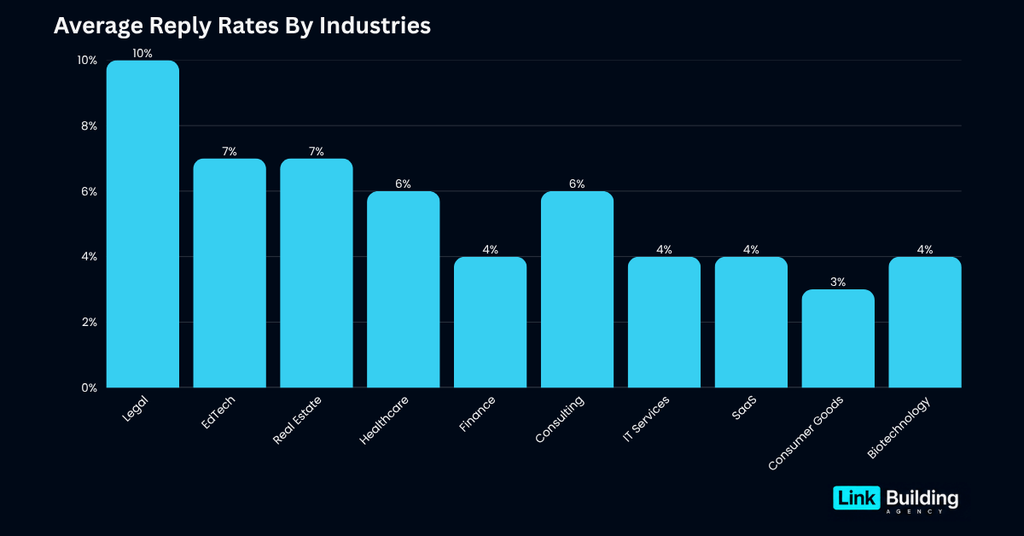
Below are the average reply rates by industry:
| Industry | Average Reply Rate |
|---|---|
| Legal Services | ~8-10% |
| EdTech / E-learning | ~5-7% |
| Real Estate | ~5-7% |
| Healthcare & MedTech | ~4-6% |
| Financial Services | ~3-4% |
| Consulting | ~4-6% |
| IT Services & MSPs | ~3-4% |
| SaaS / Software | ~2-4% |
| Consumer Goods | ~1-3% |
| Biotechnology | ~3-4% |
Smaller, tightly targeted lists under 50 recipients average a 5.8% reply rate versus 2.1% for large sends. The relationship between volume and quality is inverse.
C-level executives reply 23% more often than non-C-suite contacts, with reply rates averaging 6.4%. The data indicates that reaching the budget holder directly yields stronger response rates than targeting influencers or adjacent roles.
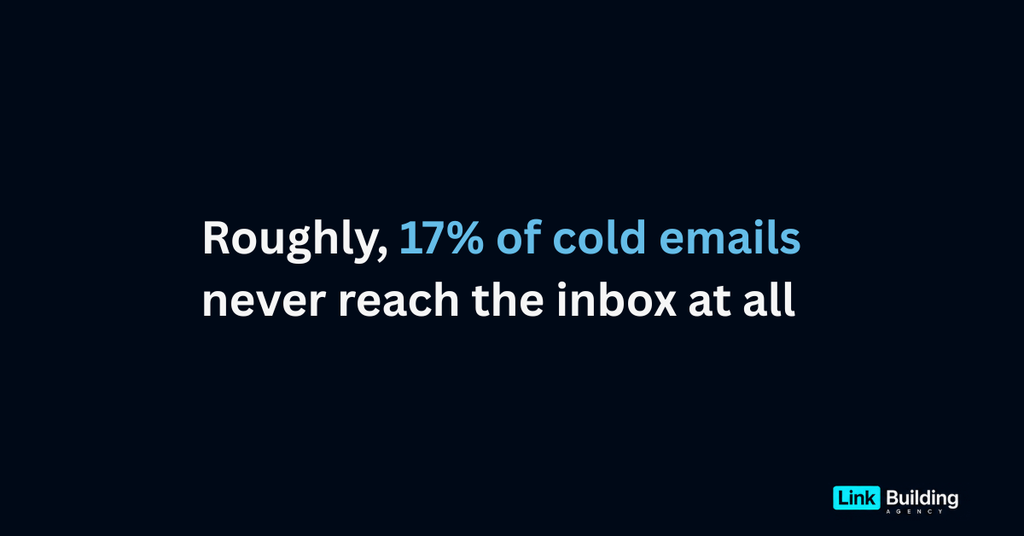
Proper email authentication, including SPF, DKIM, and DMARC, can improve response rates by up to 30.5%. Roughly 17% of cold emails never reach the inbox at all. This signals the need to fix the structure before copy optimization.
Source: Instantly, Reachoutly, Cleverly, Mailforge, Martal
Cold Email Follow-Up Statistics
58% of all replies arrive on the first step of a cold email sequence, per Instantly’s analysis of billions of campaigns. That leaves 42% of replies coming from follow-up emails. Skipping follow-ups means leaving nearly half of all potential responses unclaimed.
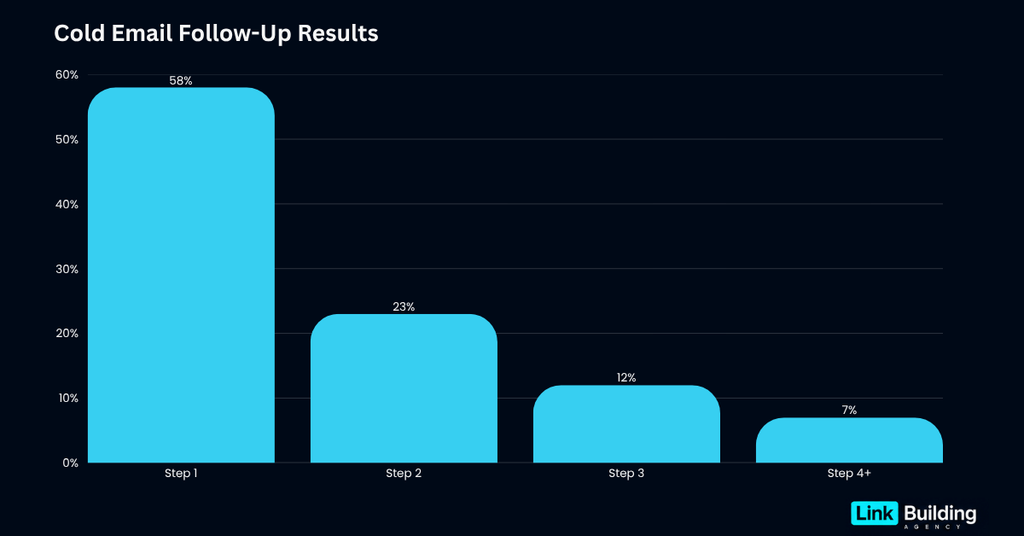
Here’s why follow-ups matter:
| Step Category | Percentage |
|---|---|
| Step 1 | 58% |
| Step 2 | 23% |
| Step 3 | 12% |
| Step 4+ | 7% |
Sending one additional follow-up increases reply rates by 65.8% compared to sending none. It is the simplest improvement any outreach program can make.
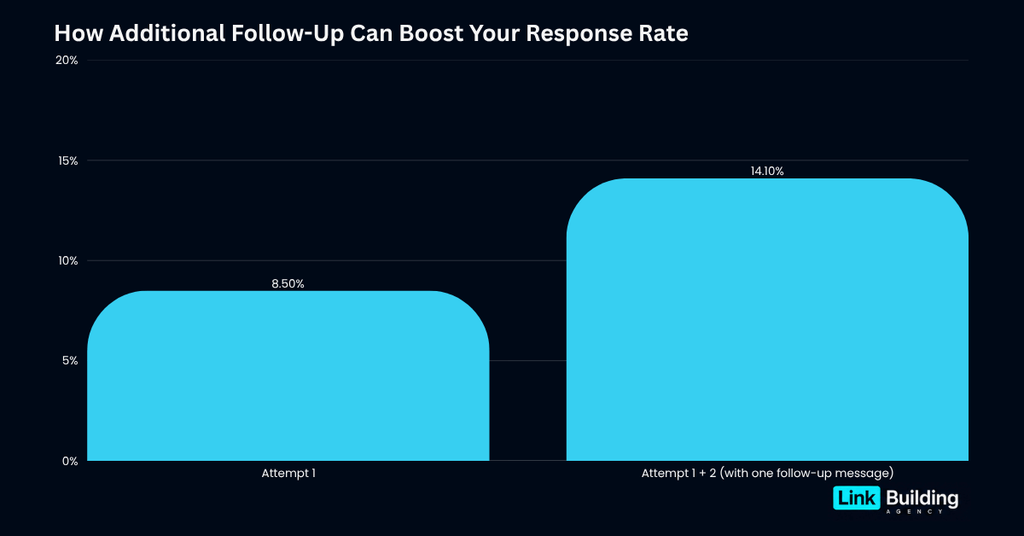
This is how additional follow-up can boost your response rate:
| Attempt | Response Rate |
|---|---|
| Attempt 1 | 8.5% |
| Attempt 1 + 2 (with one follow-up message) | 14.1% |
Source: Instantly, Backlinko
Cold Email Personalization Statistics
Personalized cold emails deliver positive ROI for nearly 9 in 10 sales teams. The impact appears at every level of the funnel.
Emails with personalized subject lines achieve a 46% open rate versus 35% without, a 31% improvement in visibility. More importantly, reply rates jump from 3% with generic subject lines to 7% with personalized ones, a 133% increase in actual engagement.
Knowing personalization works is one thing. Writing it consistently is another. Use proper prompts to generate personalized subject lines, openers, and follow-ups in under two minutes per campaign.
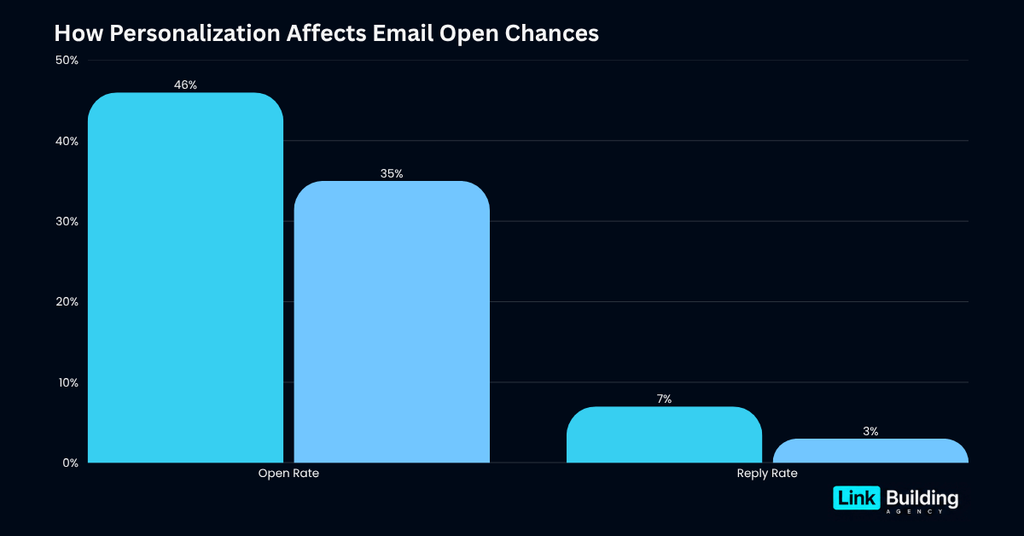
Here’s how personalization affects email open chances:
| Metric | With Personalization | Without Personalization |
|---|---|---|
| Open Rate | 46% | 35% |
| Reply Rate | 7% | 3% |
“Investing in personalization isn’t just an option. It’s non-negotiable. Personalized subject lines don’t just entice opens. They make recipients far more inclined to engage, respond, and take the next step.”
Kiril Potapkin, Head of Content at Belkins
A personalized subject line also drives a 30.5% higher response rate overall, per Backlinko’s study of 12 million outreach emails.
Top-performing campaigns keep emails under 80 words. Short emails under 100 words see a 50% higher response engagement rate than longer ones. A short, specific, relevant email reads like it was written for one person. A long, elaborately crafted email reads like a template.
Source: Sopro, Belkins, Backlinko, Vitamail
Link Building Outreach Statistics
Link building outreach operates at meaningfully higher reply rates than standard sales outreach. The pitch is not asking someone to buy something. It offers a piece of original research, a useful data point, or a well-sourced article they can cite for their readers.
That value exchange, when framed correctly, earns replies that pure sales outreach cannot.
If you’re new to terms like link velocity, editorial value, or contextual links, our Link Building Glossary covers everything you’ll encounter before you dive into these numbers.
Link Building Email Response Rate
The overall link building outreach reply rate is 21.9%, substantially above general cold email benchmarks. This gap exists because the pitch offers clear, tangible editorial value rather than a sales task.
Emails sent from a personal address like [email protected] receive 38% more opens than emails sent from generic addresses like info@ or marketing@. Switching the sender address is the fastest low-effort deliverability improvement available.
Adding links to social profiles in outreach email signatures increases response rates by 9.8%. LinkedIn, Twitter, and Instagram profile links are the highest-performing additions.
One follow-up increases the outreach response rate to 14.1%, a 65.8% boost over the first email alone. This mirrors the general cold email pattern that follow-up is non-negotiable.
Source: Vitamail
Guest Post / Blogger Outreach Statistics
Guest posting is the dominant link building tactic at scale. 64.9% of all link builders use guest posting as their primary strategy. It produces the most predictable link velocity at manageable cost.
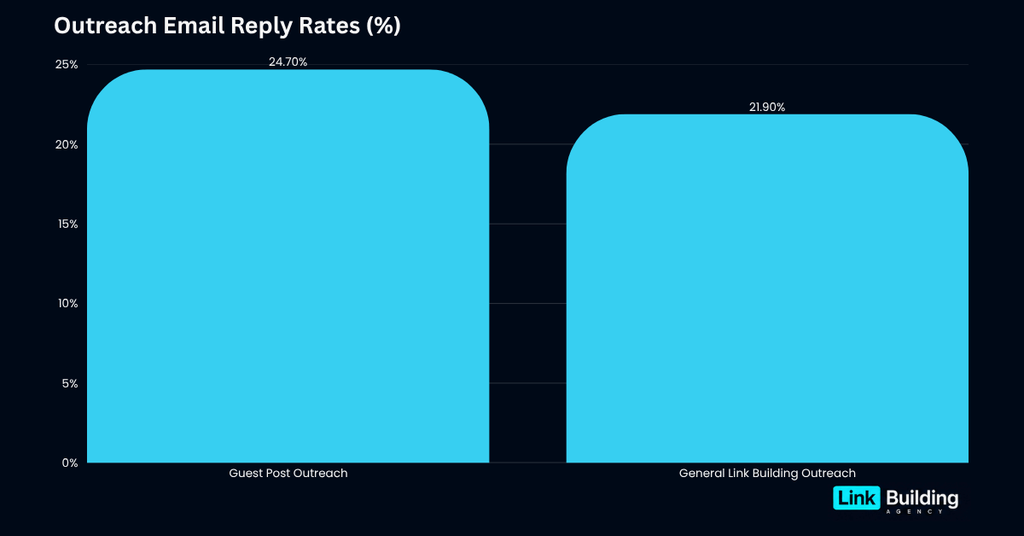
Guest post outreach achieves a 24.7% reply rate, higher than general link building emails at 21.9%. When pitches are personalized to the specific publication’s audience and editorial tone, the success rate for an actual accepted placement reaches 11.7%.
The average guest post provides one contextual link in the content and 0.3 links on average in the author bio. Bulk guest posting for volume without regard for quality produces diminishing editorial returns quickly.
Sending to multiple contacts at a target site increases response rate by 93% versus emailing only one person. If there is an editor, a content manager, and a contributing writer at the same site, reach out to at least two of them.
Source: Apollo Technical, Searchlab, Backlinko
B2B Cold Calling Statistics
Cold calling is not dead. 51% of B2B leads still come from cold calling. More than 80% of sales directors say the phone is essential to outbound lead generation.
The channel is harder to scale than email, but it reaches decision-makers in a way that email cannot match.
The average B2B cold calling success rate is 2.3%, where success means a booked meeting or qualified lead.
The optimum number of call attempts is three, at which point 93% of all conversations have occurred. Over 98% of conversations have occurred by the fifth call, making additional attempts genuinely counterproductive on the same target.
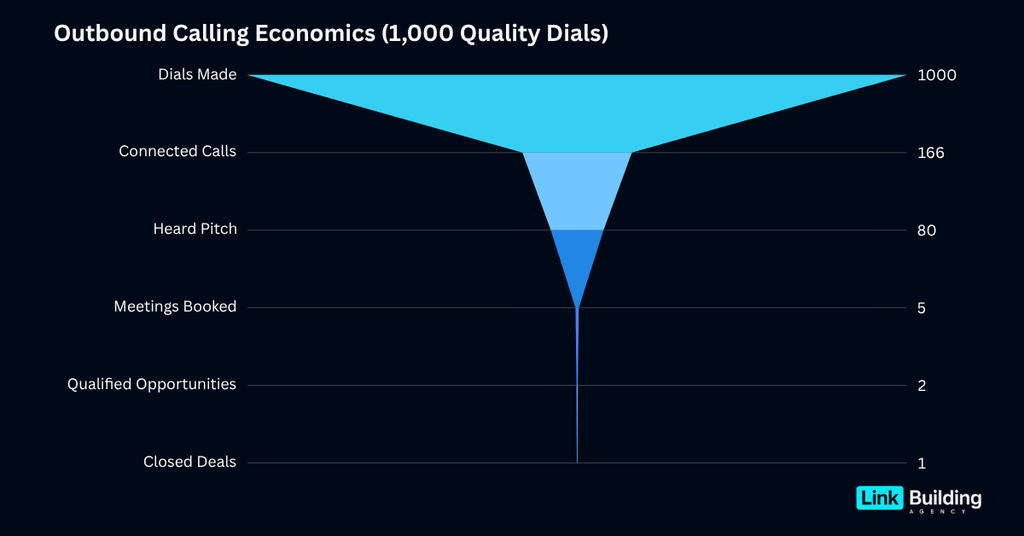
Working from Instantly’s analysis of a 1,000-dial scenario with quality data: roughly 166 connect, 50-80 hear the pitch, 4-5 book meetings, 2 qualify as real opportunities, and one may close. The fully loaded cost per lead runs $300-$500 factoring in rep salary, tools, and overhead.
Guest posting is the most scalable link building method, but Digital PR consistently earns higher-authority placements. If you’re weighing both strategies, our Digital PR Statistics report gives you the numbers to compare them side by side.
Source: Saleshive, Cognism, Cognism 2, Instantly
LinkedIn and Social Outreach Statistics
LinkedIn is where B2B buyers spend professional attention. B2B decision-makers spend an average of 17 minutes per day on LinkedIn, making it the highest-concentration professional platform for reaching decision-makers during working hours.
89% of B2B marketers use LinkedIn for lead generation, ahead of email marketing at 83%.
LinkedIn InMail generates 18-25% response rates versus 3-5% for cold email. On a per-message basis, that is a consistent 4-6x advantage. Top InMail campaigns reach 35-40% reply rates through tight targeting and short, personalized messages.
The average LinkedIn message reply rate across all outbound messages is 10.4%, with well-targeted campaigns regularly hitting 14-17%. This is substantially above cold email averages at equivalent targeting quality.
In late 2025, LinkedIn capped Open InMail sends to under 100 per month for most accounts, down from approximately 800. This makes LinkedIn a high-quality complement to email outreach, not a replacement for volume.
Multi-Channel Outreach Statistics
Multi-channel sequences combining three or more channels outperform single-channel approaches by 287%. This is not a marginal improvement; it represents the difference between an average outreach program and a genuinely effective one.
Email combined with phone increases results by 128% versus email-only campaigns.
It takes an average of five touchpoints to convert a prospect into a meaningful conversation, across LinkedIn, email, and phone. Most single-channel campaigns cap out at 2-3 touches. Multi-channel programs maintain presence across the full five without creating repetitive inbox noise.
Companies with strong omnichannel outreach strategies achieve 89% customer retention, compared to 33% for companies with weak strategies. In a sales context, the familiarity built through multi-channel contact translates directly to faster deal cycles and higher close rates.
For a properly built multi-channel outreach sequence, plan for 5-10% reply rates. Anything above 12% is exceptional. Below 3% conversion typically points to prospect list quality issues, not messaging problems.
Source: Instantly, Salesforce, Recruiterflow, Martal, QuickSEO